
The Wreck of a Transport Ship
Gallery
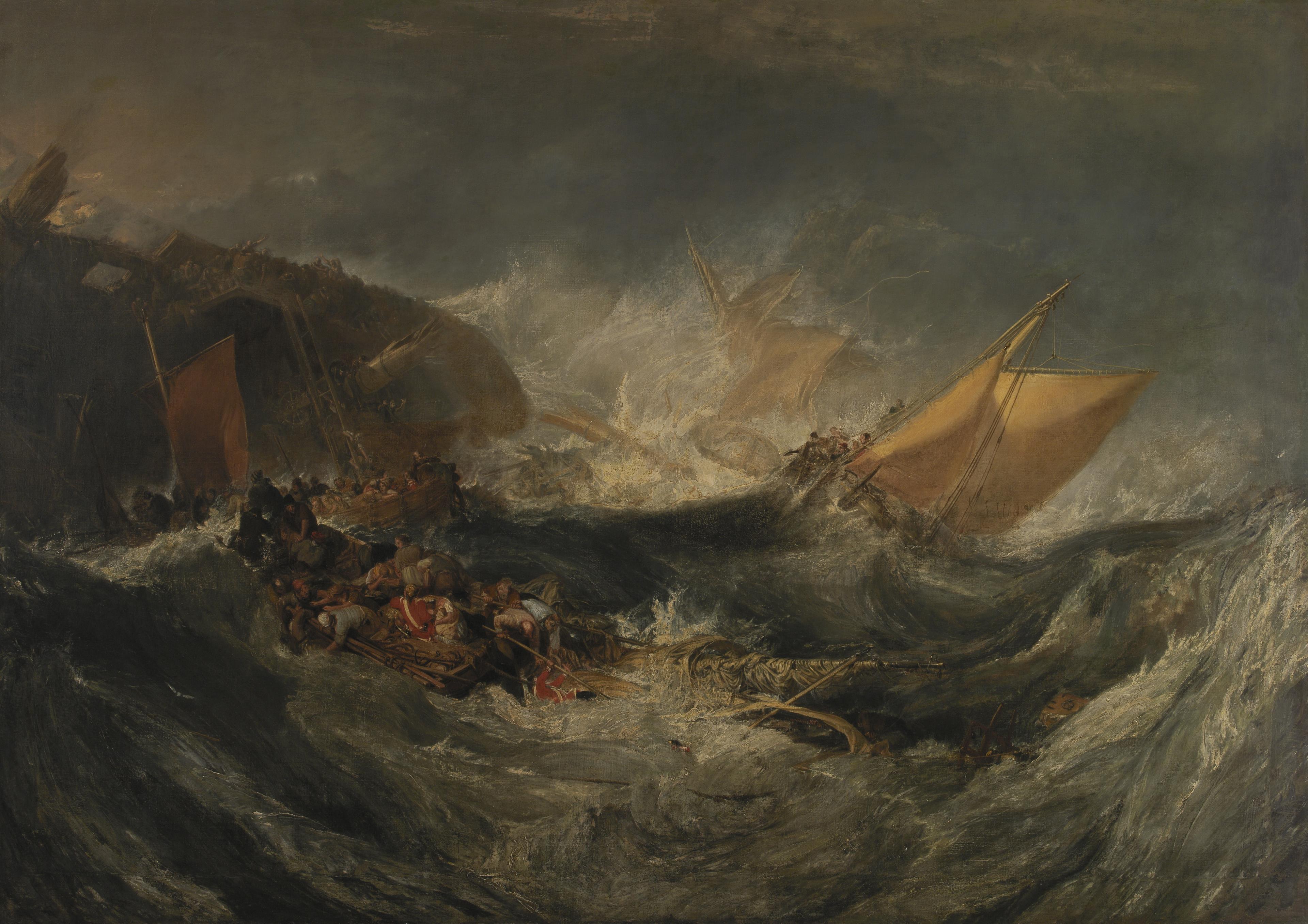
This painting is one of a series of large-scale works produced by Turner in the early nineteenth century, starting in 1801, devoted to the depiction of natural disasters and sea storms. In the past, the scene has been connected with the shipwreck of HMS Minotaur, in December 1810, a theory that has subsequently been rejected. The composition does, however, show similarities to the painting The Shipwreck (Tate Britain, London), from 1805.
The deliberately chaotic and asymmetrical construction of the space develops around the diagonals of the splintering masts and oars, which juxtapose the curves of the swirling water churning around them. The human element, insignificant and lost, can only surrender hopelessly to the violent turbulence of the waves.
The composition belongs to the finest English tradition of seascape painting, in which the theme of shipwrecks was particularly admired by that illustrious seafaring nation. Turner assimilates the legacy of the Dutch tradition, particularly that of Willem van de Velde the Younger, at the same time binding its pictorial expression to the highly significant collective imagery of the period, experienced by his contemporaries in a way that was truly emotional and obsessive.
Object details
- Author(s)
- Joseph William Turner (1775 – 1851), Painter (artist)
- Title
- The Wreck of a Transport Ship
- Origin
- England
- Date
- c. 1810
- Technique
- Oil on canvas
- Materials
- Canvas; Oil
- Dimensions
- Height 173,00 cm; Width 245,00 cm
- Inventory no.
- 260
Provenance
Incorporation
- Type
- Purchased
- Place
- London
- Provenance
- Charles Alfred Worsley Pelham, 4º Conde de Yarborough
- Intermediary
- Arthur Ruck
- Date
- 24 Jul 1920