
What We Can(‘t) Hold
Event Slider
Date
- Closed on Saturday and Sunday
Location
João Paulo II University Library Building, 1st floorUniversidade Católica Portuguesa
Pricing
- Free entry
When everything we hold firm seems to be collapsing under the weight of uncertainty and rapid transformation, ‘What We Can(‘t) Hold’ considers fragility not as something that breaks but as a force that shapes how we live, remember, and relate to one another. Bringing together nine artists and a selection of works from the CAM – Centro de Arte Moderna Gulbenkian Collection, this exhibition offers a reflection on multiple dimensions of fragility.
The works displayed are situated along a spectrum of intertwined notions of fragility: the personal, the structural and the frictional. Each dimension offers a different way of understanding how vulnerability cracks, bends and sometimes falls apart as soon as we touch it.
The structural dimension looks outward at the vast web that seems to hold our society together. It questions what happens when the systems we depend on begin to fracture, and injustices resurface as history repeats itself. Manuel Botelho (1950, Lisbon), through his ‘101.rç-cmb (from the series Confidential / Declassified: combat food)‘ (2007-2008), collects artefacts of moments that he didn’t witness and puts them on full display, while Miguel Palma (1964, Lisbon), in ‘Upa! Union of the People of Angola‘ (2006), seems to lock them away in plain sight. Here, fragility emerges not as a weakness, but as a signal that transformation is both unavoidable and necessary.
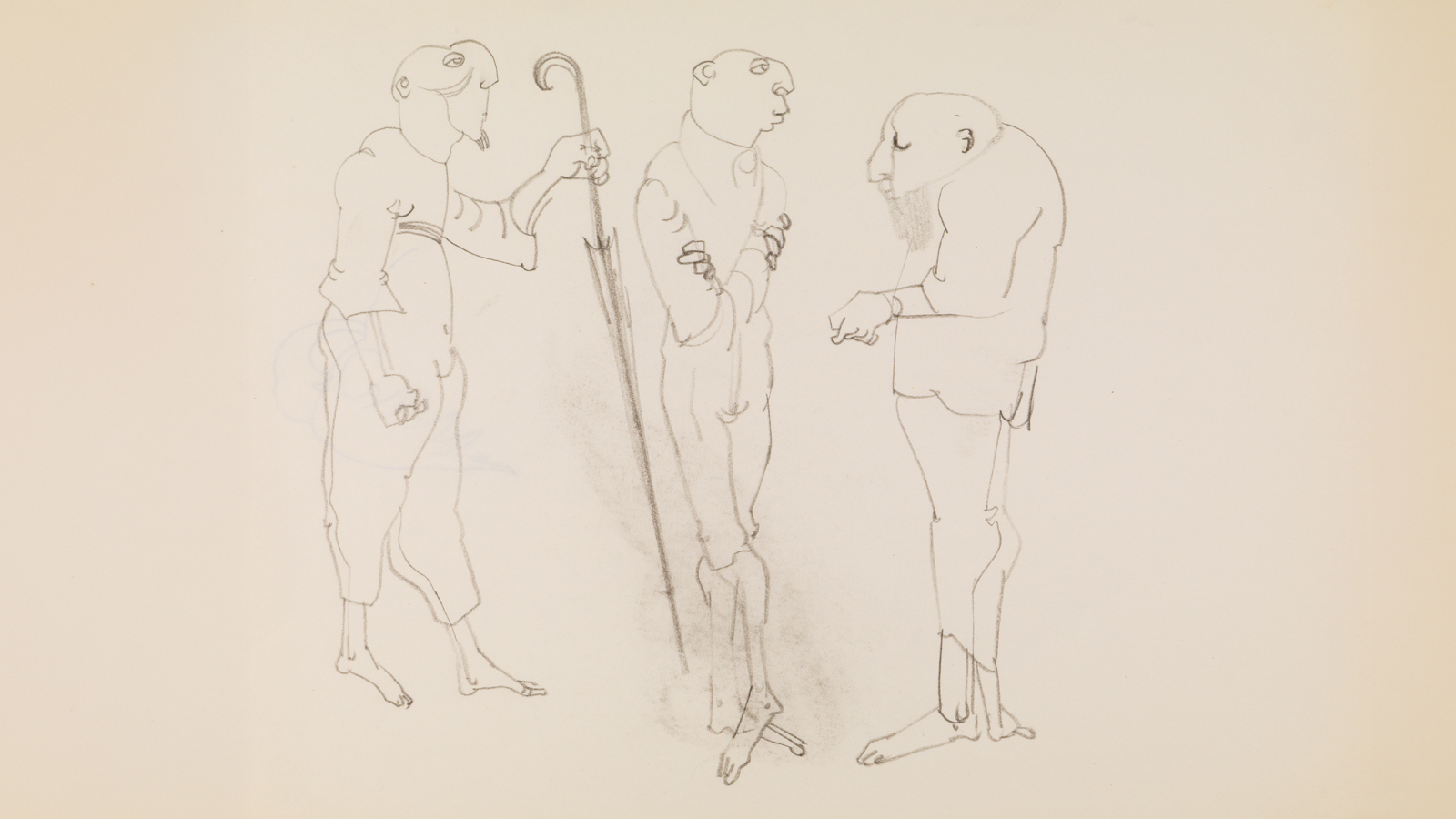
The personal dimension directs us inward into the delicate architecture of ourselves. It reflects identities that are always shifting, the collections of memories we archive within ourselves, and the persistent urge to hold on to what is fleeting. Yonamine (1975, Luanda), with ‘Eu não sou eu‘ (2004), and Maria Altina Martins (1953, Luanda) with ‘Time – Childhood, Adolescence, Maturity‘ (1997/2000), arrange fragments, textures of daily life, discarded materials, and scraps of memory to evoke this unstable construction, while Maria Antónia Siza (1940, Oporto – 1973, Oporto), in her series ‘Untitled‘ (60s) construct potential images leaving gaps to be filled in by the gaze of others. In ‘Falling On Stage‘ (2021), Fernão Cruz’s (1995, Lisbon) protagonist is in free fall, rendered vulnerable before the gaze of an audience.
The frictional dimension exists in a liminal space where the forces of the past and future, destruction and renewal, and the personal and collective converge. Margaret Benyon (1940, Birmingham – 2016, London) gives these dimensions holographic images that resist being grasped in her ‘Conjugal Series: Hands and Rice and Binding 2‘ (1983). In her ‘No trace of accelerator‘ (2017), Emily Wardill (1977, Rugby) transforms us into spectators of the qualities that never sit still. Finally, Gabriela Albergaria’s ‘To turn around 40‘ (2001) weaves elements of nature with artificiality.
Together, these perspectives invite us to reconsider fragility as a force of revelation of what we choose to preserve, allow us to die or rebuild. Ultimately, ‘What We Can(‘t) Hold’ is an invitation to pause, to look closely and to hold things more lightly as we navigate continuous change.
This exhibition, organised in the context of the partnership between The Lisbon Consortium of the Universidade Católica Portuguesa and CAM – Centro de Arte Moderna Gulbenkian, was curated by the MA students in Culture Studies (seminar of Curatorial Practices), for the Amélia de Mello Foundation Gallery, at the Universidade Católica Portuguesa, in Lisbon.
Credits
Main image
Maria Antónia Siza, 'Untitled', anos 1960. Coleção do CAM
Organisation
Universidade Católica Portuguesa
Cultura @ Católica 2024
Artists Featured
Emily Wardill; Fernão Cruz; Gabriela Albergaria; Manuel Botelho; Margaret Benyon; Maria Altina Martins; Maria Antónia Siza; Miguel Palma e Yonamine.
Editorial
Anika Borko
Sarah Zammit Munro
Melissa Liebertha
Direndra Selvanayagam
Sarah Tober
Anna-Sohpie Löhr
Communication
Justin Stewart Ross
Natalia del Río
Leonor Marques dos Santos Queiroz
Silvia Lomdardini
Léanne Charron
Iana Kardanova
Installation design
Amal Abu Nafisah
Imani D. Cooper
Margarida Dias
Margarida da Fonseca
Giulia Benetti
Circé Poisson
Tatiana Fraisse
Paralell programme
Lucille Gerebtzoff
Yoosun Choi
Hajer Khader
Vitor Fonseca
Margarida Martins Raimundo
Constança Mafra
Curatorial and scientific coordination
Luísa Santos
Graphic Design
Íris Sousa
Installation
Feirexpo
The Calouste Gulbenkian Foundation reserves the right to collect and keep records of images, sounds and voice for the diffusion and preservation of the memory of its cultural and artistic activity. For further information, please contact us through the Information Request form.