
Eid al-Fitr, the end of fasting
Event Slider
Date
- Closed on Tuesday
Location
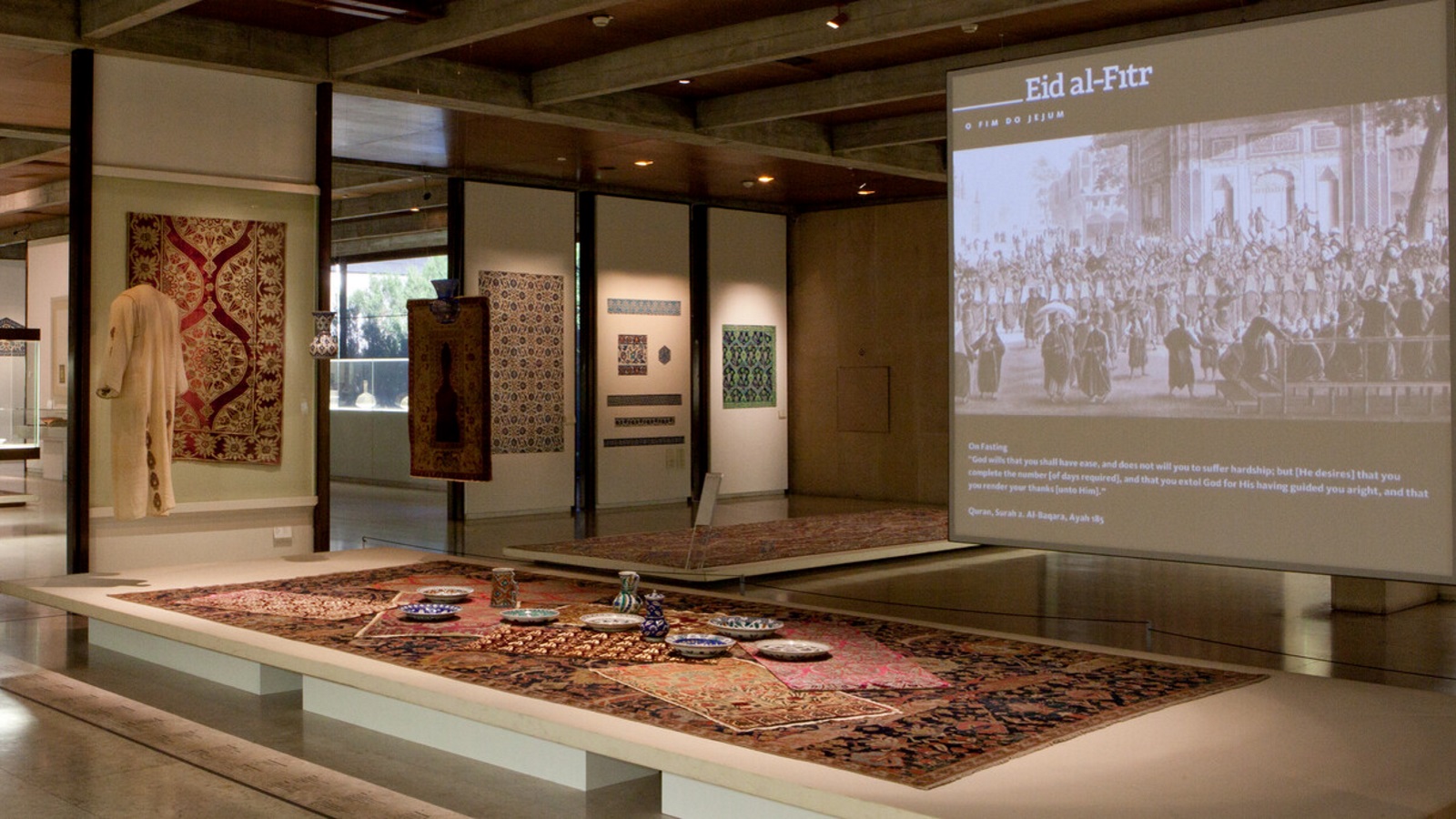
Calouste Gulbenkian MuseumThe first intervention took place in March, with an installation around Noruz, a moment that marks the beginning of the New Year and spring for the entire Persian world and Central Asia. June saw the second installment of this initiative, with an installation around Eid al-Fitr, a ritual of great importance for the entire Muslim world as it marks the end of the Ramadan fast.
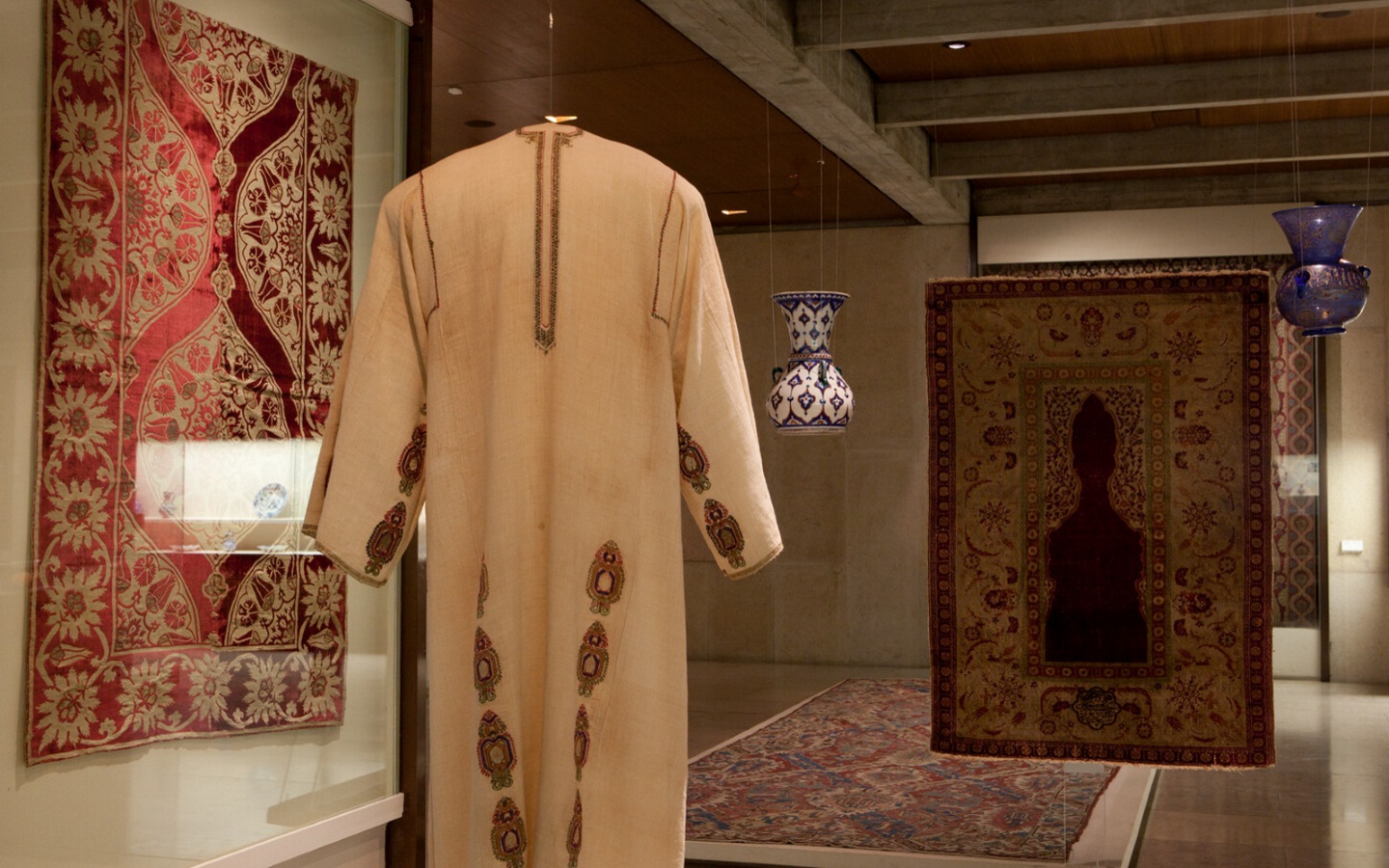
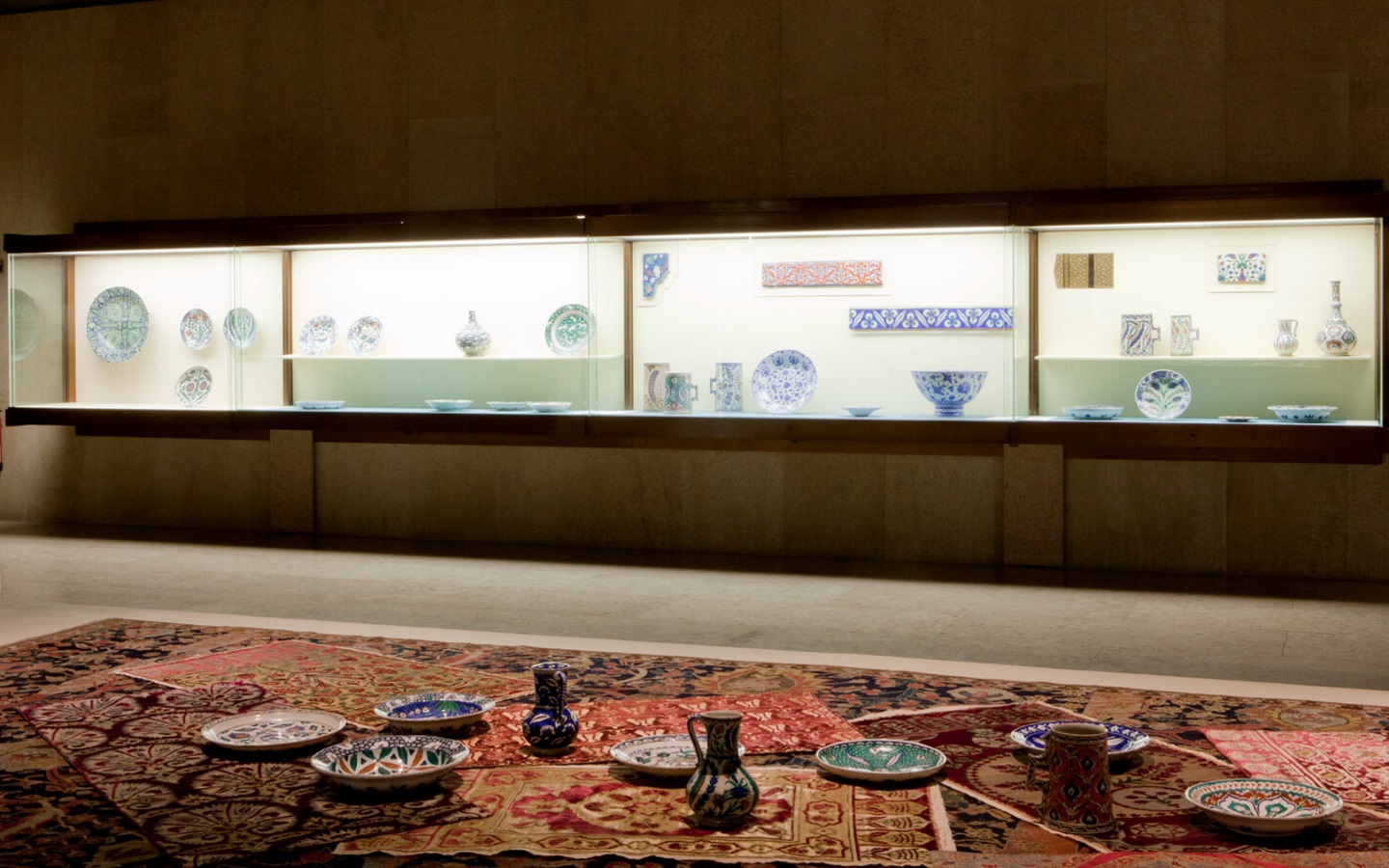
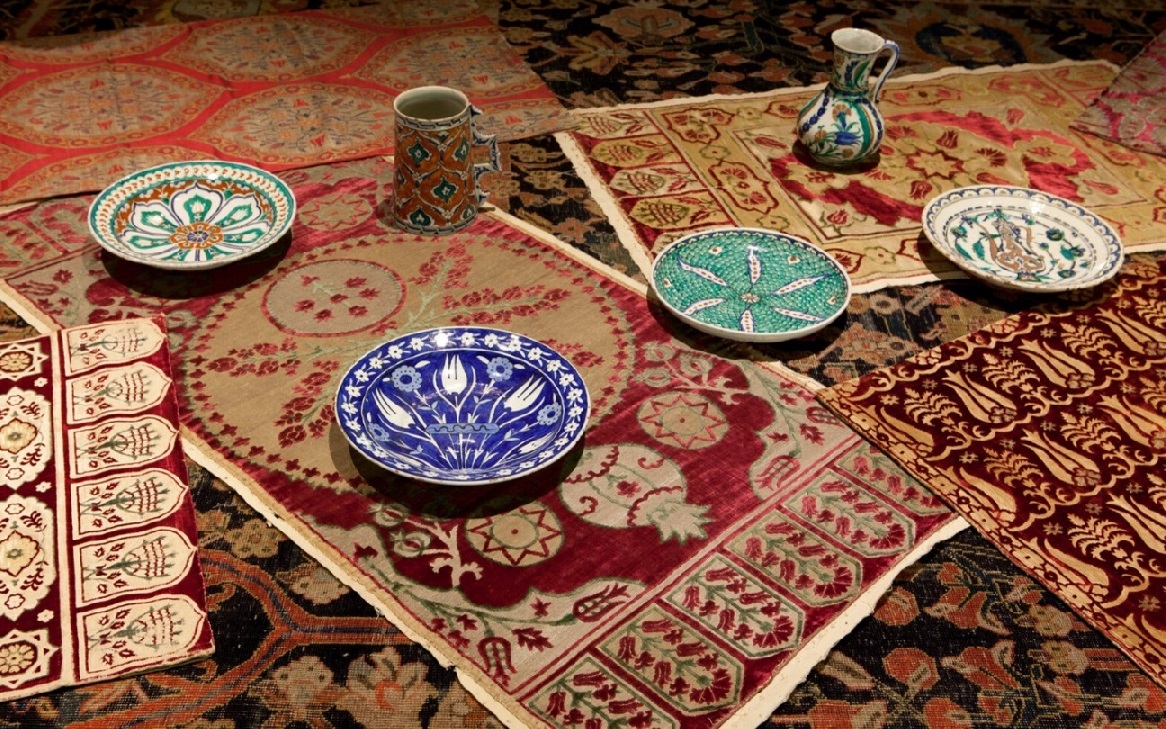
Based on the evocation of these celebrations, Noruz and Eid al-Fitr, a presentation is staged of a series of objects from the Collection which, in a given historical and social context, were part of these festivities, namely the banquets. In the exhibition Eid al-Fitr, the end of fasting, the intervention centres on a rug from the Caucasus (inv. T83), involving predominantly Ottoman objects such as ceramics, textiles, a mosque lamp and a prayer rug.
This project is curated by researcher and professor Sussan Babaie and students from the Courtauld Institute of Art, University of London, in collaboration with curators Clara Serra and Jorge Rodrigues, from the Calouste Gulbenkian Museum.
Credits
Curators
Clara Serra
Jorge Rodrigues
Exhibition project
Mariano Piçarra
Graphic project
Overshoot design