
Holly
Ilex aquifolium L.
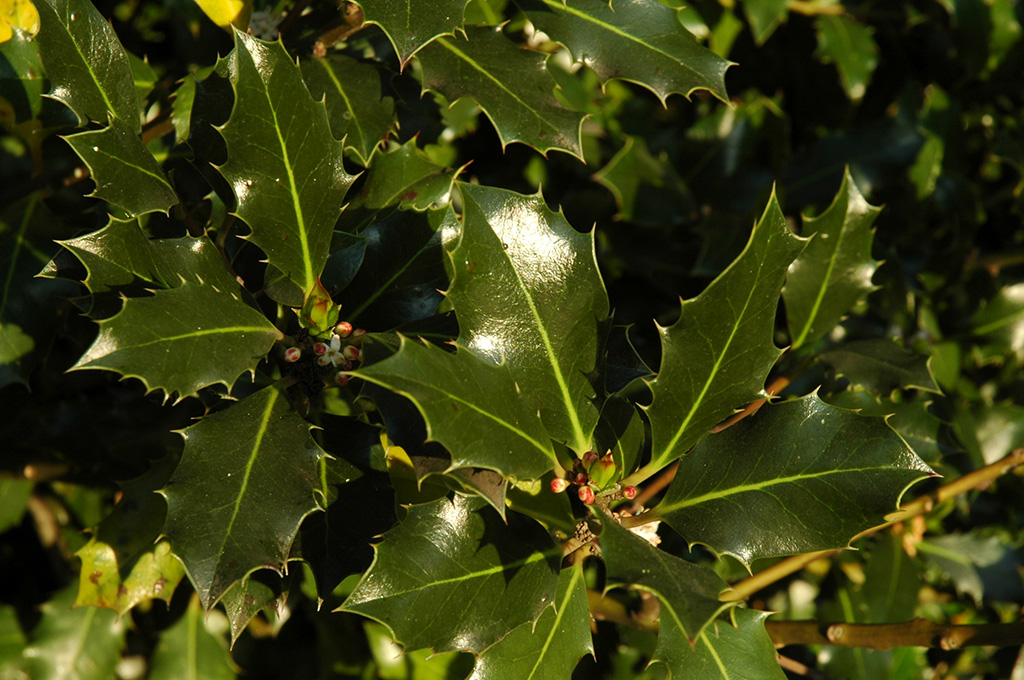
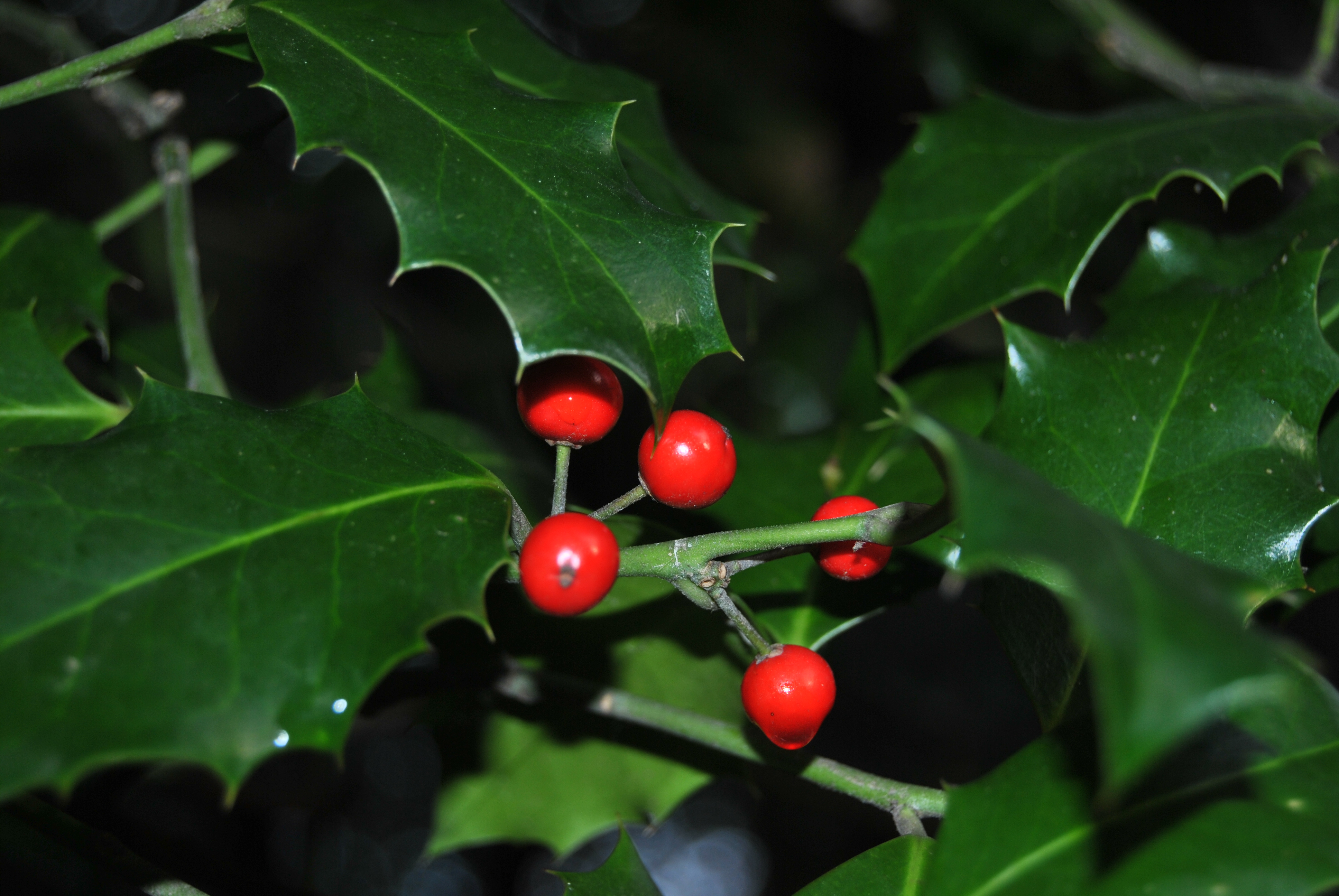
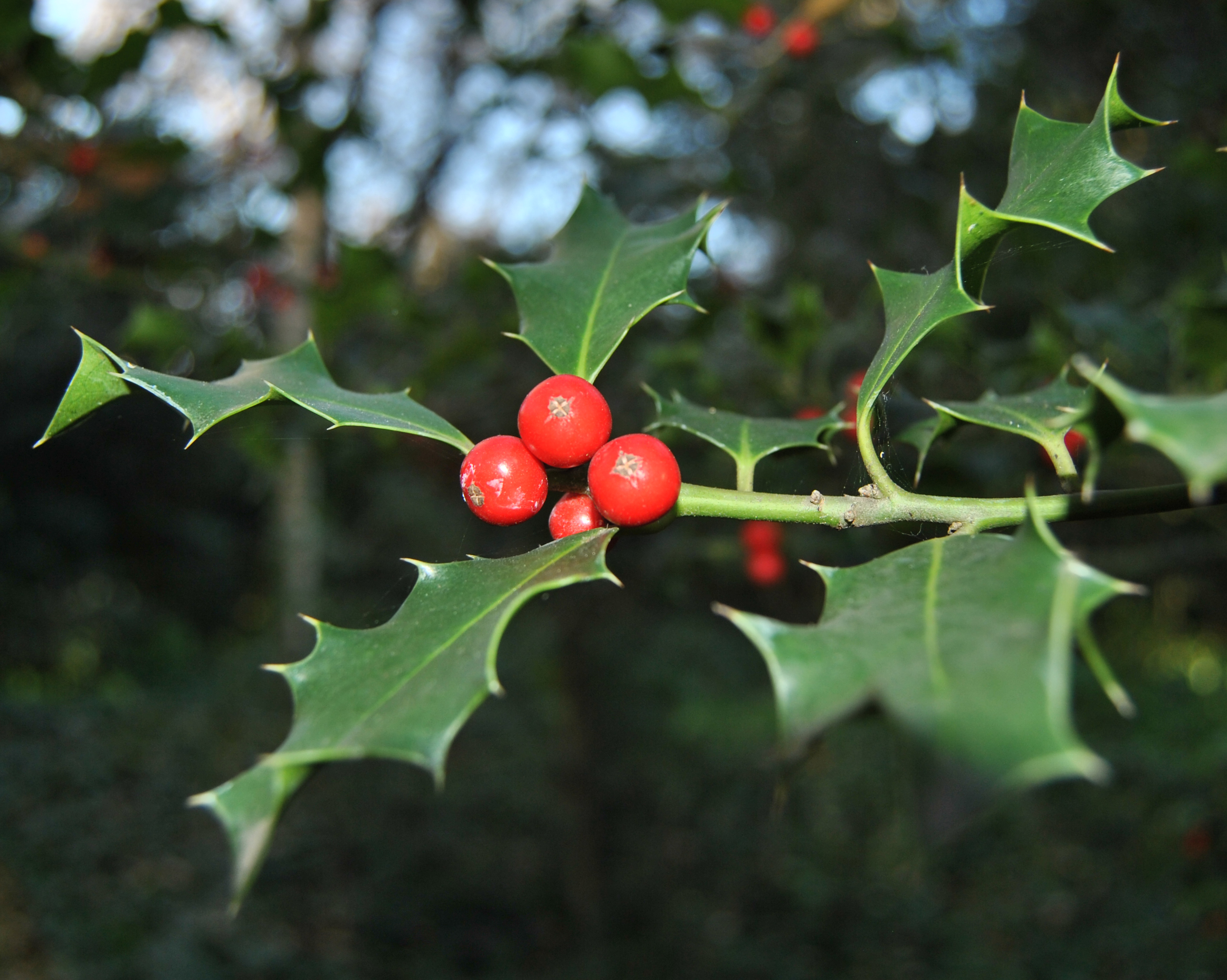
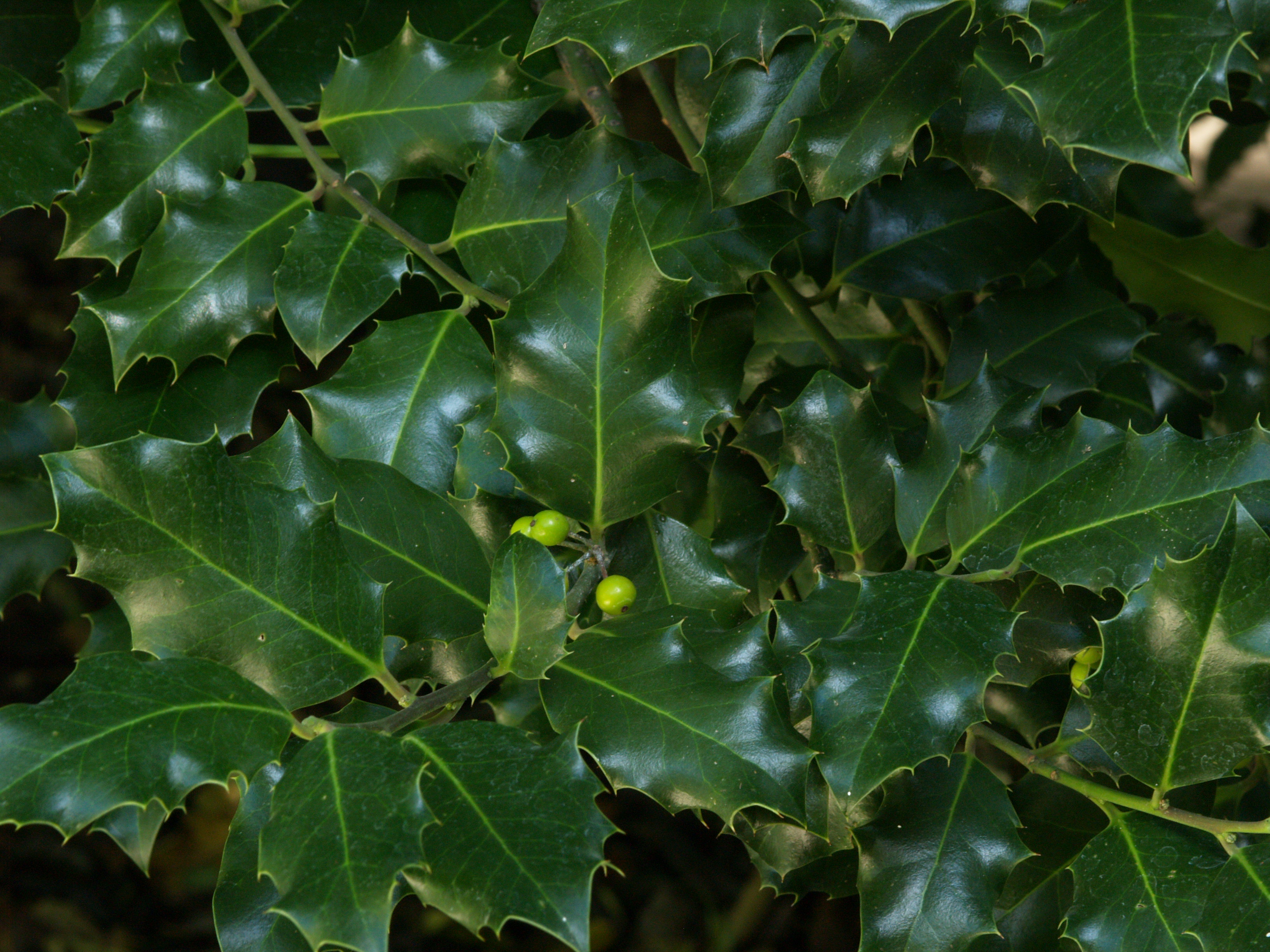
The holly is a slow-growing evergreen shrub or small tree that can reach around 6 metres in height and live for more than 100 years. Its dark green leaves, often glossy and edged with sharp spines, together with its striking red berries, make it one of the most readily recognizable species in the European flora.
Native to mainland Portugal, this species occurs naturally in moist and shaded woodlands and mountainous areas. It prefers cool, slightly acidic soils rich in organic matter and is often associated with oak woods and other native forests.
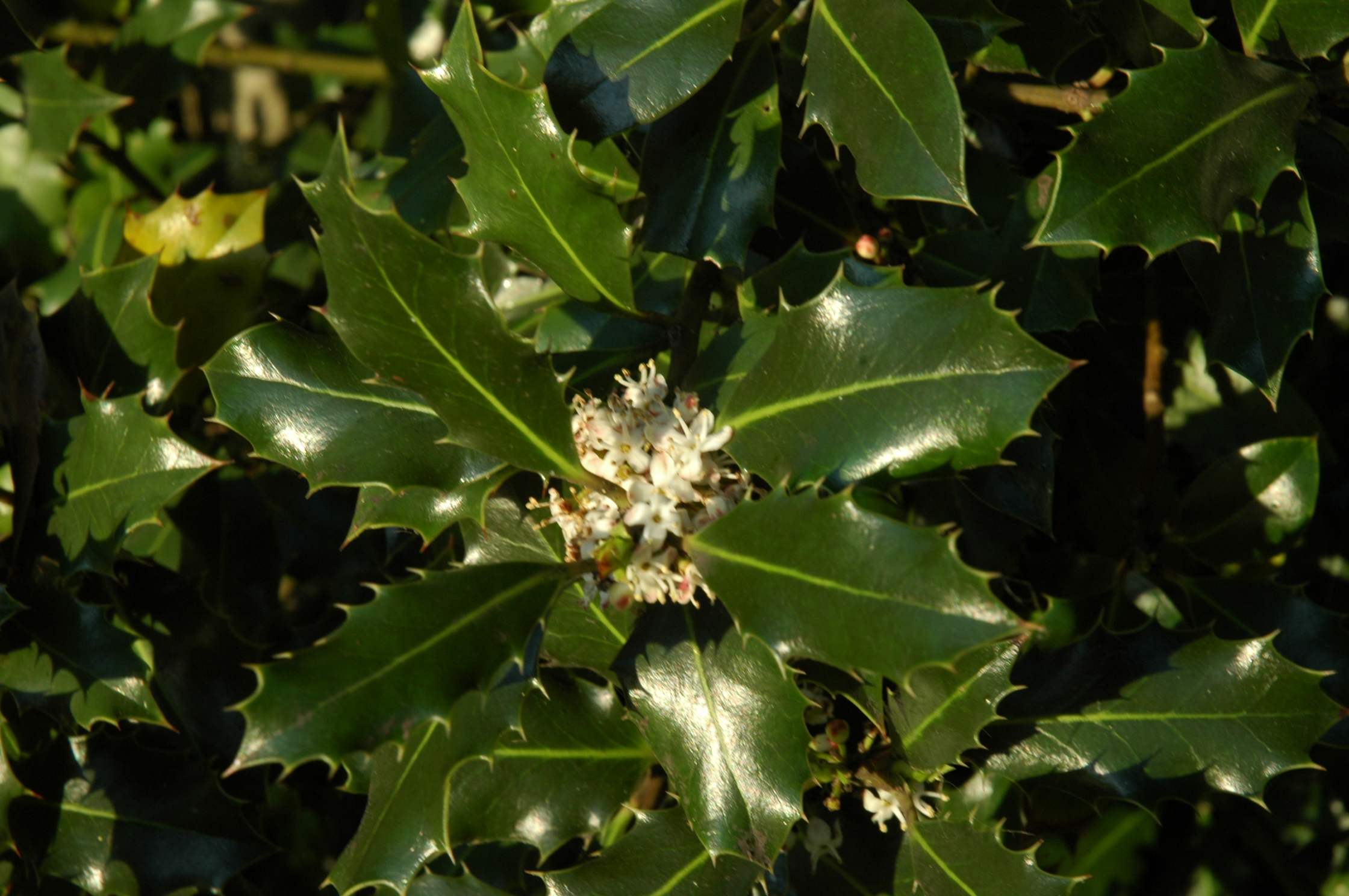
The small white flowers appear in spring and provide resources for a variety of pollinating insects. The fruits ripen in late summer and remain on the plant throughout the winter, constituting an important food source for several bird species. Only female specimens produce fruit.
Highly valued for its ornamental appeal, holly is a traditional symbol of the Christmas season, owing to the striking contrast between its dark green foliage and bright red berries.
In the past, the excessive harvesting of branches contributed to the decline of natural populations. For this reason, wild holly is a protected species in Portugal, and its collection, transport, and sale of wild holly are prohibited.
The genus name (Ilex) was the Latin name originally used for the holm oak and was later applied to holly because of the similarity of their leaves. The specific epithet aquifolium refers to the plant’s characteristic spiny foliage.