
Helena Almeida (1934-2018)
Corte Secreto, Inv. 85FP380


Exposição da artista plástica Helena Almeida (1934-2018), realizada na Galeria de Exposições Temporárias (piso 0) da Fundação Calouste Gulbenkian, entre 15 de abril e 8 de maio de 1983, com apresentação de 117 trabalhos produzidos entre 1974 e 1983. A artista tinha sido bolseira da Fundação Calouste Gulbenkian em 1964.
Esta exposição reunia algumas das suas pesquisas plásticas (exploradas nos desenhos de crina, volumes, antipinturas, desenho e pintura habitada), num nítido processo de renovação estética. Foram ainda apresentados alguns trabalhos inéditos, incluindo as obras selecionadas por Ernesto de Sousa para a XL Bienal de Veneza, em junho de 1982, e as obras da exposição realizada em 1981 na Galerie Bama, em Paris.
A montagem da exposição privilegiava o percurso cronológico da obra de Helena Almeida, com um núcleo introdutório na zona de entrada e com a apresentação de um conjunto de slides que funcionava como uma retrospetiva da obra da artista, entre 1966 e 1973, subdividido em núcleos intitulados «pinturas», «antipinturas», «objetos», «ambientes» e «antidesenhos».
O percurso da exposição permitia a apreensão do percurso criativo da obra de Helena Almeida na exploração do suporte tradicional da pintura e na introdução da fotografia e da performance do corpo no desenvolvimento do ato artístico, com a transposição da linha e da mancha para o espaço, numa manipulação feita pela mão, sem a mediação do lápis ou do pincel.
O catálogo da exposição tem por base a monografia publicada pela Fundação Calouste Gulbenkian por ocasião da presença da artista na Bienal de Veneza. Os textos são de Ernesto de Sousa, Rui Mário Gonçalves, José-Augusto França e Helena Almeida. O catálogo é favoravelmente apreciado como obra de referência no estudo do percurso criativo da artista: «Trata-se de um valioso catálogo, através do qual nos é possível abarcar a obra da artista e a sua evolução e grande presença na Arte Portuguesa.» («Catálogo da exposição de Helena Almeida», Distrito de Setúbal, 10 mai. 1983)
A exposição foi muito noticiada na imprensa. No Expresso, por exemplo, numa crítica assinada por José Luís Porfírio, é apresentada como um projeto que «pretende contar uma história, e conta-a muito bem!», e o autor assinala o discurso cronológico patente no circuito expositivo nomeando títulos que dão identidade formal à mostra, tais como: «Pré-história», «Introdução», «Pintura Habitada», «Dentro-fora», «Comunicar?» e «O Negro».
Na revista Colóquio/Artes, Fernando de Azevedo faz uma nota crítica da exposição, descrevendo-a como «magnífica exposição recente, nas galerias de exposição da Fundação» (Azevedo, Colóquio/Artes, jun. 1983, pp. 71-72).
Carolina Matias, 2017
The exhibition of the plastic artist Helena Almeida (1934 – 2018) held at the Calouste Gulbenkian Foundation’s (FCG) Temporary Exhibition Gallery – (Ground Floor) from April 15 to May 8 1983, presented 117 artworks produced between the years of 1974 and 1983. The artist had been a FCG’s grantee during the year of 1964.
This exhibition brought together some of her artistic research (explored in horsehair drawings, volumes, anti-paintings, and inhabited painting), showing a clear process of aesthetic renewal. It also presented some new artworks, including the selection made by Ernesto de Sousa for the XL Venice Biennale in June 1982, and the works of the artist exhibition held at Galerie Bama in Paris, in 1981.
The layout of the exhibition favoured a chronological route through Helena Almeida’s work, starting with an introductory section in the entrance area and with the presentation of a set of slides, offering a retrospective of the artist's work between 1966 and 1973, subdivided into the following groups: paintings, anti-paintings, objects, environments and anti-drawings.
The exhibition itinerary allowed the visitors to understand the creative pathway of Helena Almeida’s work while exploring the traditional media of painting and in the introduction of photography and body performance in the development of the artistic act, which are represented by the transposition of the line and the spot into the space – a handmade manipulation, without the mediation of a pencil or a brush.
The exhibition catalogue is based on the artist’s monograph, published by the FCG on the occasion of the Portuguese artist’s appearance at the Venice Biennale. The critical texts were written by Ernesto de Sousa, Rui Mário Gonçalves, José-Augusto França and Helena Almeida herself. The catalogue is duly appreciated as a reference work in the study of the artist’s creative path: "It is a valuable catalogue through which we can cover the artist’s work as well as its evolution and great presence in the Portuguese Art" (“Catálogo da exposição de Helena Almeida” [Helena Almeida’s exhibition catalogue], Distrito de Setúbal, May 10, 1983).
The exhibition has been widely covered by the press. For example, in a review published in Expresso by José Luís Porfírio, the exhibition is presented as a project that "intends to tell a story, and does it very well!” Also, the author refers to the chronological itinerary as Prehistory, Introduction, Inhabited Painting, Inside-out, Communicating? and The Black, respecting the formal identity of each one of the exhibition sections.
In the Colóquio. Artes journal, Fernando de Azevedo writes a critical note of the exhibition, describing it as "a magnificent recent exhibition in the exhibition galleries of the Calouste Gulbenkian Foundation" (Azevedo, Colóquio. Artes..., Jun 1983, pp. 71-72)
Corte Secreto, Inv. 85FP380

Desenho Habitado, Inv. 94FP378

Desenho Habitado, Inv. FP379

Ouve-me, Inv. IM13

Pintura Habitada, Inv. 80FP12

Sem título, Inv. DP142

Separação, Inv. FP13 1-4
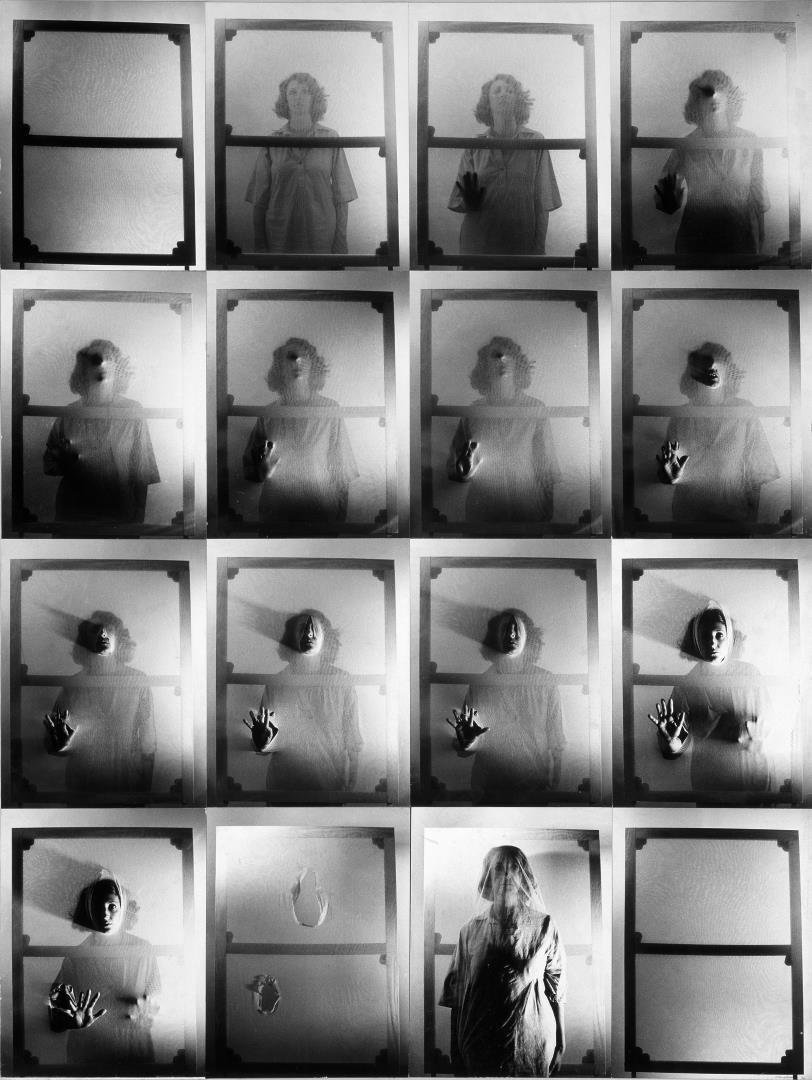
Tela Habitada, Inv. 80FP381


