José de Almada Negreiros

Parva 5
5 Jun 1920

Gallery


Object details

Author(s)
José de Almada Negreiros (Cidade da Trindade, São Tomé e Príncipe, 1893 – Lisbon, Portugal, 1970)
Title
Parva 5
Date
5 Jun 1920
Materials and media
Paper\Ingres paper; Permanent ink; Aniline dye
Technique
Permanent ink on paper
Dimensions
Height 31,60 cm; Width 24,10 cm
Inventory no.
DP246

Inscriptions

Type
Title
Description
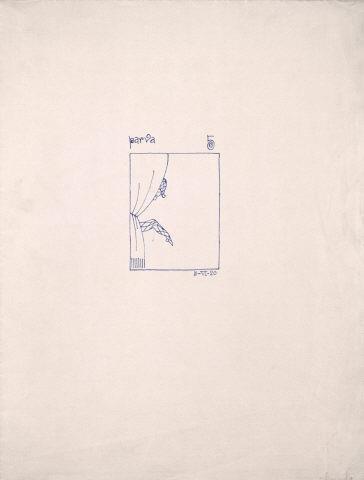
parva 5
Position
Upper margin, centre, page 1
Type
Date
Description
5 - VI - 20
Translation
05 de Junho de 1920
Position
Lower right quadrant, page 1
Type
Signature
Position
Lower right corner, page 1

Text

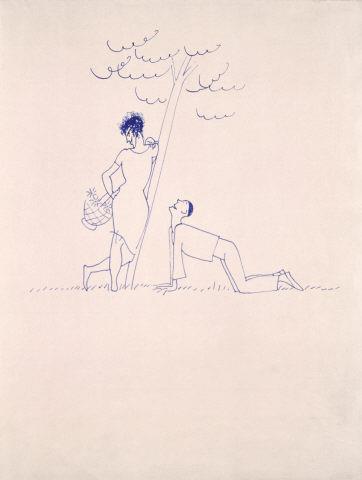
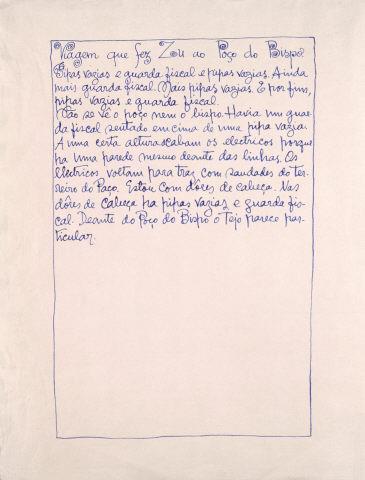
Fifth issue of the handwritten journal Parva (em Latim) [Parva (in Latin), where ‘parva’ in Portuguese also means ‘fool’], of which four numbers are known (124 and 5, all conserved in the CAM collection). The journal was conceived in the context of the ‘Five Colors Club’,* a ballet group created in 1918 on the occasion of the creation and performance of O jardim da Pierrette [The garden of Pierrette], written by Almada himself. The club was formed by Almada and four young friends, addressed by nicknames: Tareca (Maria Madalena Morais da Silva Amado), Lalá (Maria Adelaide Burnay Soares Cardoso), Zeca (Maria José Burnay Soares Cardoso) and Tatão (Maria da Conceição de Mello Breyner). The performance of O jardim da Pierrette was a decisive moment for the genesis of Almada’s poetics of ingenuity, here related to topics seen as essential to creation such as childhood, imagination and spontaneity. Almada would further develop these themes during his stay in Paris between 1919 and 1920.

Almada himself authored the entire journal, though he didn’t sign any of the drawings nor the text ‘Viagem que fez Zu ao Poço do Bispo’ [Jorney made by Zu to Poço do Bispo, where Zu is a nickname of Almada, probably an abbreviaton meaning ‘blue’] which are included in this issue. Though none of the drawings or the text are dated, they were probably made in 1920, after Almada’s return from Paris to Lisbon.


* Other works from the collection of the CAM also belong to this context. See the drawings and letters with inventory numbers DP167DP168DP176DP183DP184DP247DP248DP249 and DP250.


SAF

May 2010

Cookies settings

Cookies Selection

This website uses cookies to improve your browsing experience, security, and its website performance. We may also use cookies to share information on social media and to display messages and advertisements personalised to your interests, both on our website and in others.