
Kengo Kuma CAM
in English
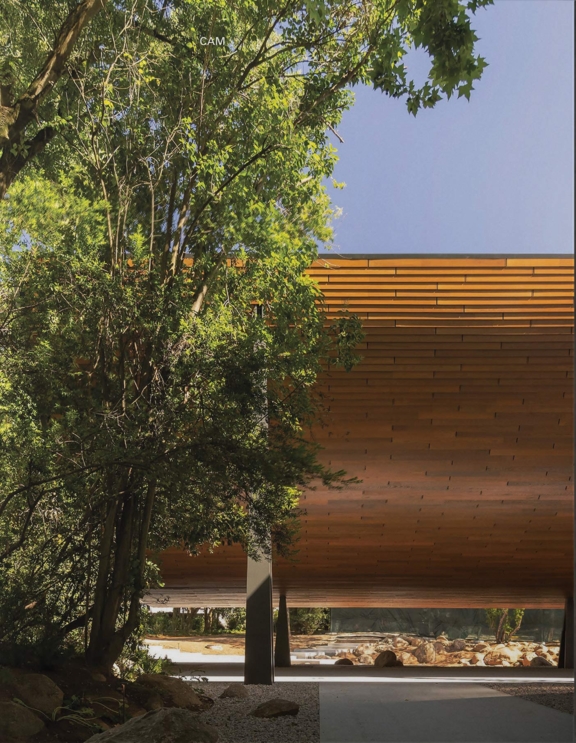
The task of designing cities has been guided by features that promote contact and contagion between people and their surroundings. Now more than ever, the city is a place of transformation and collective construction. The CAM building marks its surrounding landscape through lines that make up its form, in dialogue with those that define the city of Lisbon.
Architect Kengo Kuma was the winner of the competition put to twelve teams of architects, six of them Portuguese and six international. His proposal emphasises the holistic integration of all the elements in the landscape, promoting the idea of a space that is equally integrated and complementary.
The CAM building is in itself a project that materialises a multi-sensory experience, appealing to the senses of those who occupy it. Its forms are an extension of the garden that surrounds it, the result of the encounter between people, nature and art, exploring the idea of a transitional space between these elements. ENGAWA is the designation used by Kenga Kuma for a space that is neither totally interior nor totally exterior.
The materiality of the building emphasises the relationship between Portugal and Japan, exploring wood and tiles as complementary elements in this contact. The meeting point between the two becomes a starting point for the surrounding community.
In this publication, the creative process is presented in dialogue with texts, references, drawings and photographs.
Technical information
- Language:
- English
- Editorial coordination:
- AMAG Publisher and CAM – Centro de Arte Moderna Gulbenkian
- Edited:
- 2024
- Dimensions:
- 291mm x 231mm x 8mm
- Pages:
- 64
- Original title:
- Kengo Kuma CAM
- ISBN:
- 978-989-35767-1-7