
Sammy Baloji. Missa Utica
Event Slider
Date
- 20:00 / Cancelled 20:00 / Sold out Saturday, 20:00
Location
Open-Air Amphitheatre Gulbenkian GardenPricing
- 10,00 €
10% – Cartão Gulbenkian and Cartão Gulbenkian Mais
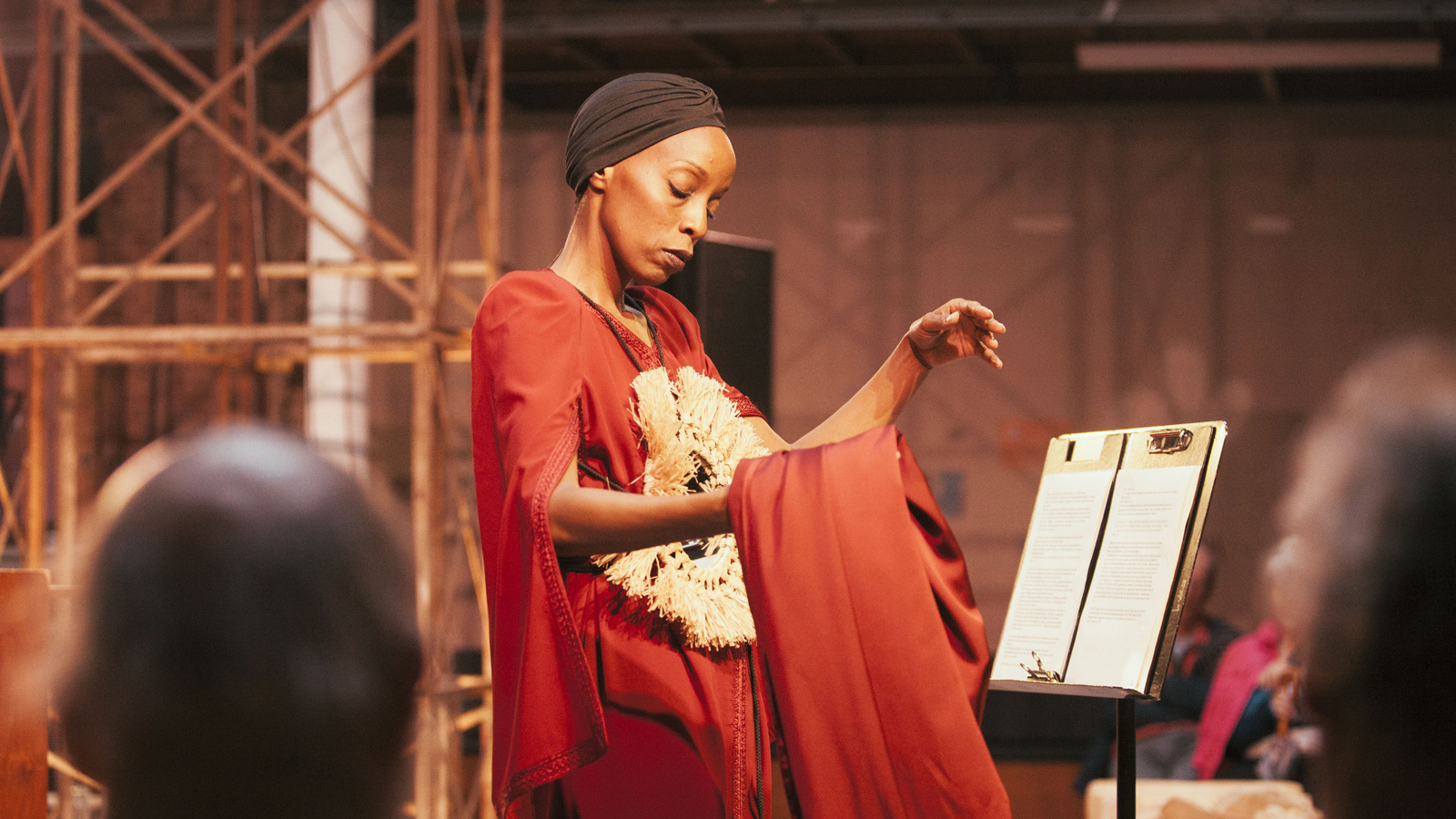
Missa Utica by Sammy Baloji is a performance that revisits the early contacts between Europe and the Kingdom of Kongo, intertwining colonial memory, spirituality, and music.
In partnership with Contemporânea, the CAM presents, at the intersection of live performance, concert, and artistic montage, Missa Utica (2024) by Sammy Baloji (DR Congo, 1978). The work brings together performers Fiston Mwanza Mujila, Pytshens Kambilo, and Barbara Drazkow Drążkowska in a dialogue with the historical ties between Europe and the Kingdom of Kongo. Memories of colonisation interweave with spirituality, colonial memory, music, and performance.
Based on extensive research conducted by Sammy Baloji on Congolese objects scattered across European collections, Missa Utica returns to the initial contact between Western Christianity and the Central African region, which occurred around the final years of the 15th century. Episodes linked to the evangelical religious conversion of the Kingdom of Kongo, colonial power dynamics, and the resulting cultural and political transformations are revisited within this context.
The title refers to Utica, an ancient Roman city located within the borders of modern-day Tunisia—a place chosen as a symbol, as it was there that the first African bishop of Black descent, Dom Henrique, son of King Afonso I of Kongo, was consecrated. This historical moment serves as a starting point to reflect on how European Christianity spread across the African continent and the relationships it forged with slavery, colonisation, and processes of cultural erasure.
A key highlight of the work is the Missa Luba, a liturgical composition created in the Belgian Congo in the 1950s by Franciscan missionaries, based on traditional Congolese musical styles. Although it gained visibility in Europe and the United States, little was said about the colonial conditions that allowed for its emergence. In Missa Utica, this past resurfaces, but now intertwined with Congolese rumba, recited verses, and improvised sounds.
Throughout the performance, music, text, and image merge into layers; different temporalities occupy the same space without hierarchy. Bodies speak for themselves, bringing forward histories of displacement, resistance, and survival. Voices emerge as traces of struggle and persistence against erasure. In this way, memory does not remain solely in the past—it reappears.
Rather than committing to a single format, Missa Utica blends elements of modern ritual with traces of sound performance. The work follows Sammy Baloji’s ongoing investigation into how colonial archives shape identities, historical narratives, and collective imaginaries.
Missa Utica is part of the Performance Program My Center is Not in the Solar System, under the artistic direction of Celina Brás and curated by Alexandra Balona.
Biographies
-
Sammy Baloji
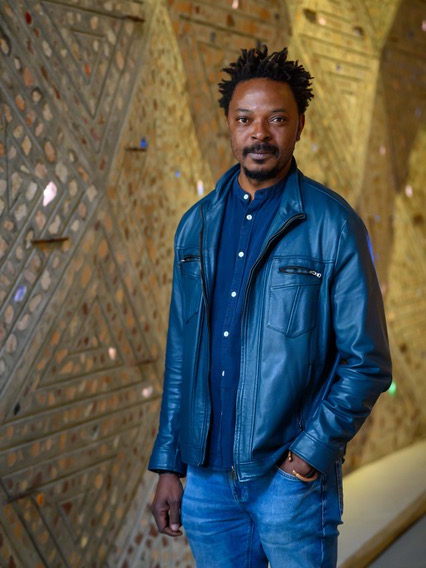
Sammy Baloji (Lubumbashi, DR Congo, 1978) is a visual artist and photographer. His work is an ongoing investigation into the cultural, architectural, and industrial heritage of the Katanga region, as well as a questioning of the effects of Belgian colonization, highlighting the way identities are shaped, transformed, perverted, and reinvented. He co-founded Picha in 2008, the organization that started the Lubumbashi Biennale. His recent solo exhibitions include ‘K(C)ongo, Fragments of Interlaced Dialogues’ (2022), ‘Other Tales’ (2020), ‘Congo, Fragments d’une histoire’ (2019), ‘A Blueprint for Toads and Snakes’ (2018), ‘Urban Now: City Life in Congo’ (2016), ‘The Power Plant’ (2016-2017). He recently participated in the Venice Architecture Biennale (2023) and the Sydney Biennale (2020). He is now part of the collection at Tate, in London. In 2009, he was honored with the Prince Claus Award, from the Netherlands.
Programme
20:00 – 21:00 / Concert-performance Missa Utica
21:00 – 21:30 / Talk
21:30 / Closing
Credits
Research, concept, and staging
Sammy Baloji
Text
Fiston Mwanza Mujila
Performance
Bwanga Pilipili
Musical composition and performance
Pytshens Kambilo
Barbara Drazkov
Costume design
Samira Benali
Scenography
Minne de Meyer Engelbeen – Twenty Nine Studio & Production
Carpets manufactured by
Salah Amamou
Amel Jelassi
Kaouthar Hedli
Olfa Bjaoui
Hanen Hedli
Marwa Saidani
Production
Estelle Lecaille
Marek Szponik – Twenty Nine Studio & Production
Co-production of Missa Utica
Kunstenfestivaldesarts
Festival DreamCity
KANAL Centre Pompidou
Museo delle Civiltà
With the support of
Federation Wallonia-Brussels
Partnership

The Calouste Gulbenkian Foundation reserves the right to collect and keep records of images, sounds and voice for the diffusion and preservation of the memory of its cultural and artistic activity. For further information, please contact us through the Information Request form.