
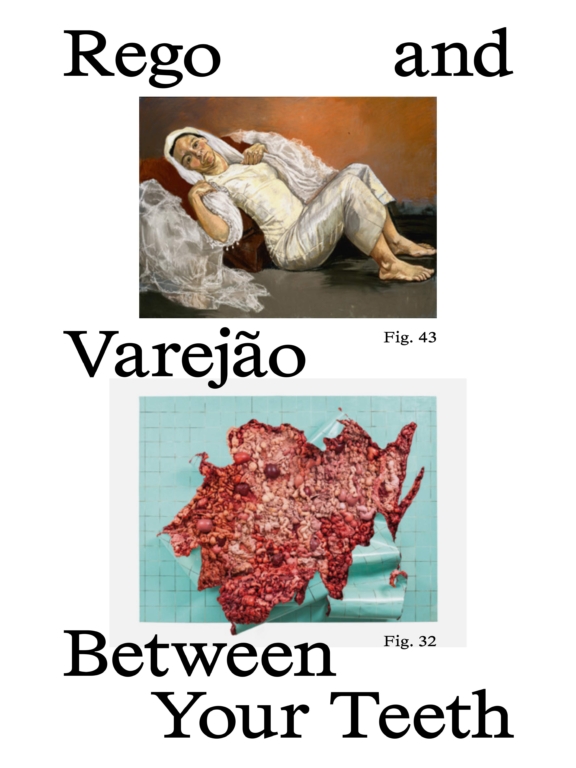
Paula Rego and Adriana Varejão
Between Your Teeth
Event Slider
Date
11 Apr – 22 Sep 2025
- Wed, Thu and Fri,
- Closed on Tuesday
Location
Nave Centro de Arte Moderna GulbenkianPlease be advised that some content may not be suitable for all viewers.
Pricing
Free – Under 18
25% – Under 30
10% – Over 65
Cartão Gulbenkian:
Free – Under 30, saturdays,
18:00 – 21:00
50% – Under 30
20% – Over 65
10% – 30 to 64
This major exhibition featuring two women artists from different generations, revisiting their work, interweaving their themes and presenting fresh readings.
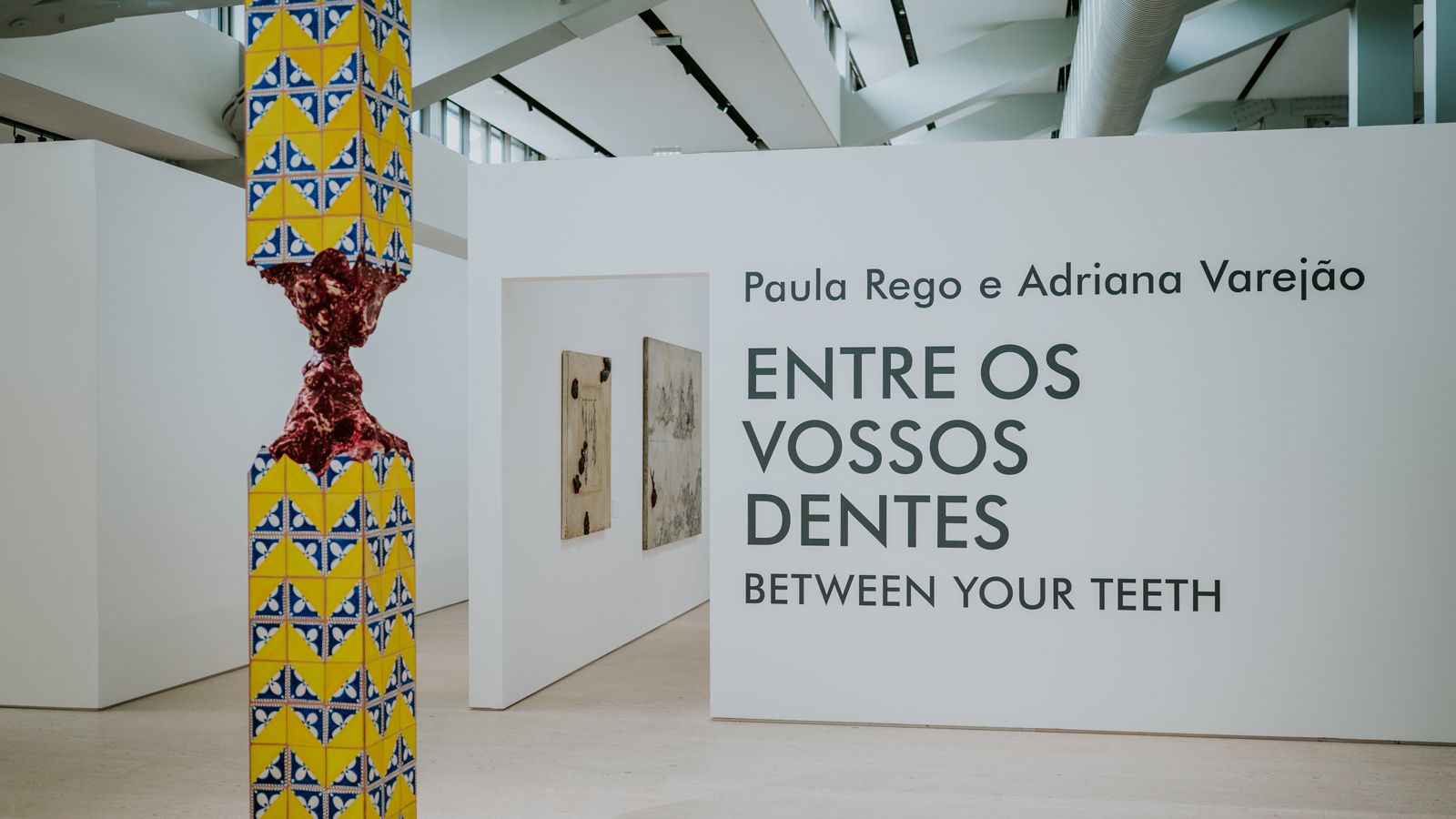
‘Between Your Teeth’ is the subtitle of the exhibition, featuring around 80 works by two internationally recognised artists: Paula Rego (Lisbon, 1935 – London, 2022) and Adriana Varejão (Rio de Janeiro, 1964). The title is taken from a poem by Hilda Hilst, ‘Poems for the men of our time’, and in this verse we immediately sense the raw nature of this encounter.
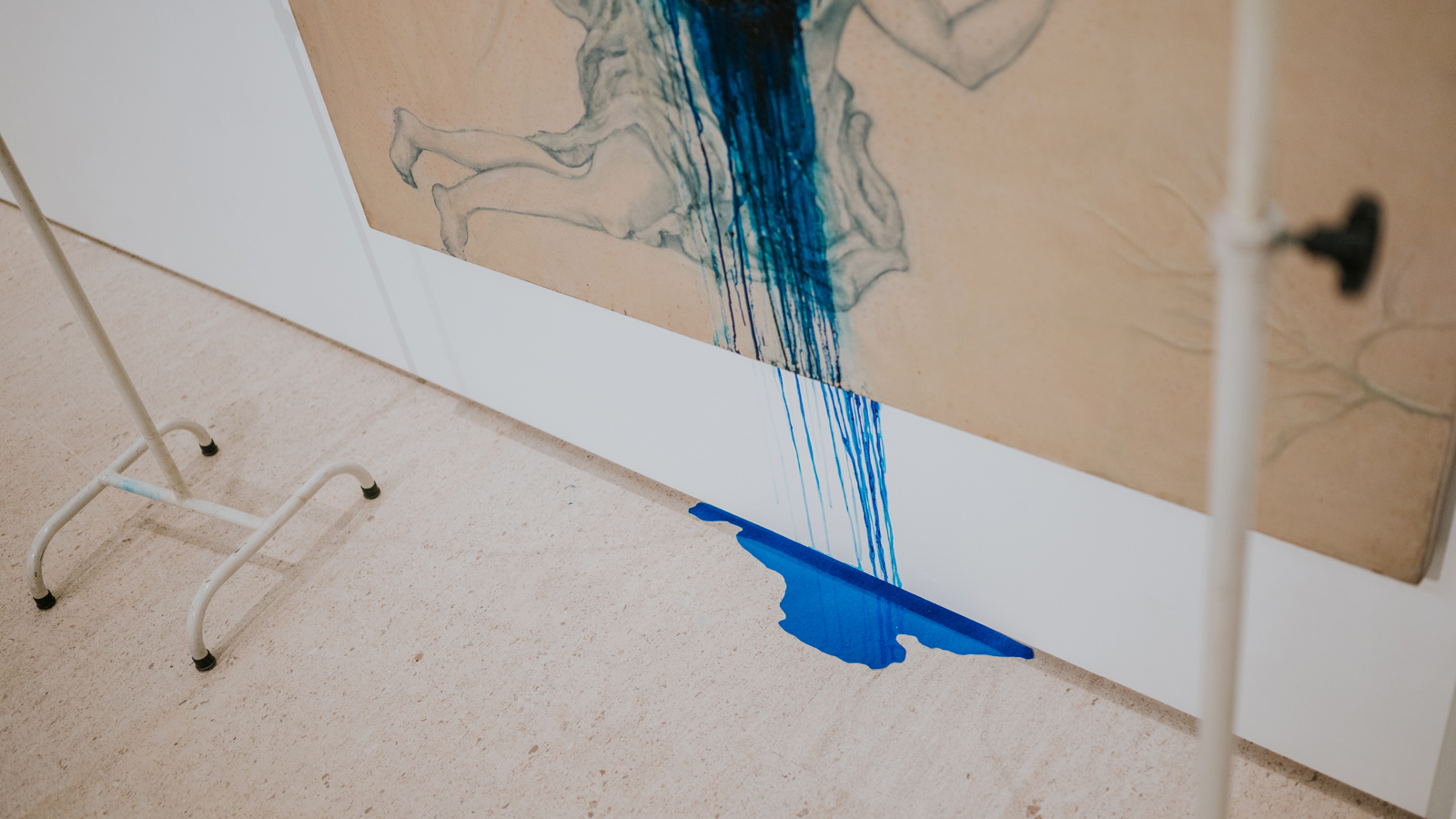
CAM’s spacious nave has been reconfigured for the exhibition, creating 13 rooms, in a rhythmic succession of constructed and labyrinthine spaces, ripped open by cracks and vanishing points, and marked by a tension between the expressive density of the interior space and the bare walls of the exterior, between the inside and the outside, the domestic and the public space. An architectural body has thereby been created, in which the nakedness of the skin conceals accidents of the flesh.
This could be the first metaphor for this exhibition, where in each room we discover the various ‘layers’ behind the thematic universes of the two artists. Incorporeal, immaterial and subtle in the case of Paula Rego; more physical and visceral in Adriana Varejão’s works. We discover what lies beneath the skin of each artist: while Paula Rego paints a sword, suspended in mid-air, Adriana strikes and bites until she draws blood.
The raw material they explore is the humanity referred to in the poem, its history and the stories of all the violence and injustices – whether of a civilisational or intimate nature. The artists work in transformative exasperation, deconstructing and subverting official narratives, multiple references, literary, artistic, historiographical, diverting the primordial meaning of these different sources.
Paula Rego and Adriana Varejão are from different generations, from two continents, Europe and South America, separated by the Atlantic Ocean, but their activity coincided over a period of three decades, pursuing autonomous paths, which often converged at multiple levels. This exhibition has sought to bring to each of its thematic rooms, points of intersection where these lines intertwine and generate points of light, in a dramaturgy in which the selected works are the main protagonists.
The title of the exhibition is taken from ‘Poems for the Men of Our Time’ by Brazilian poet and novelist Hilda Hilst, written in 1974, a clear hint at the state of dictatorship Brazil had already been experiencing for ten years.
'Beloved life, my death is long in the coming.
Say what to the man,
Propose what journey? Kings, ministers
And all of you, politicians,
What word
Besides gold and darkness
Remains in your ears?
Besides your own RAPACITY
What do you know
Of the souls of men?
Gold, conquest, profit, deceit
And our bones
And the blood of the people
And the lives of men
Between your teeth.'
— Excerpt from Hilda Hilst, ‘Poems for the Men of Our Time’
Translated by Alison Entrekin. Originally published as ‘Poemas aos homens dos nossos tempos’, in Júbilo, memória, noviciado da paixão, 1974.
/
Topics
Memories of Sugar and Salt
We Eat, Dance, Kill and Mix
Echo Chamber
Cleansing Rituals
Extirpations
Sharpened Knife
Inside the Room, Out of Myself
Body in Trance
Reconfiguring the Sacred
In Spite of You
Extraordinary Creatures
The Sea, Where I Am to Myself Given Back in Salt, Foam, and Shell
-
I Was Land, a Womb, a Torn Sail
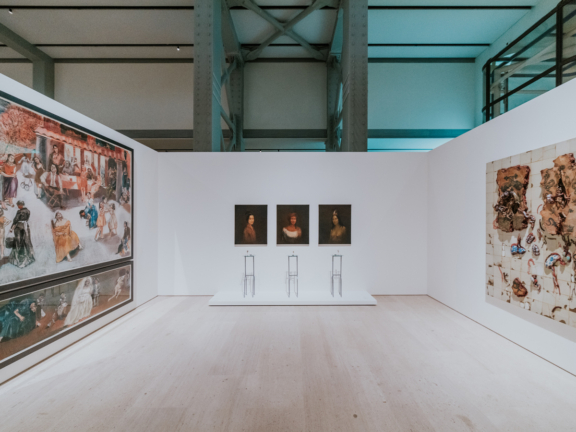
This room brings together works by Paula Rego and Adriana Varejão that question colonial and patriarchal narratives, and explore how historical images have shaped the perceptions of power, territory and the body. In ‘The First Mass in Brazil’, Rego alludes to an iconic painting of 1860, by the Brazilian artist, Victor Meirelles, which depicts what would have been the first Portuguese Catholic mass attended by the indigenous people of what was to become Brazil. Rego shifts the gaze from the traditional religious scene to a pregnant woman in the foreground, thereby suggesting that colonisation was not just a territorial and religious project, but also a process that traversed female bodies, imposing a system of control and erasure.
Varejão reinforces this critique in ‘Bastard Son II (Interior Scene)’, by displacing characters from Jean-Baptiste Debret’s early nineteenth-century paintings to stage a story that is not revealed in the French artist’s original painting, but highlights the racial and gender hierarchies that underpinned the colonial structure. In ‘Map of Lopo Homem’, a colonial map is burst asunder by a sutured wound, indicating that the violence associated to conquest remains latent and insurmountable.
Using parody, both artists revisit well-known images and open crevices in the dominant narratives, proposing new interpretations of memory, identity and resistance.
-
Memories of Sugar and Salt
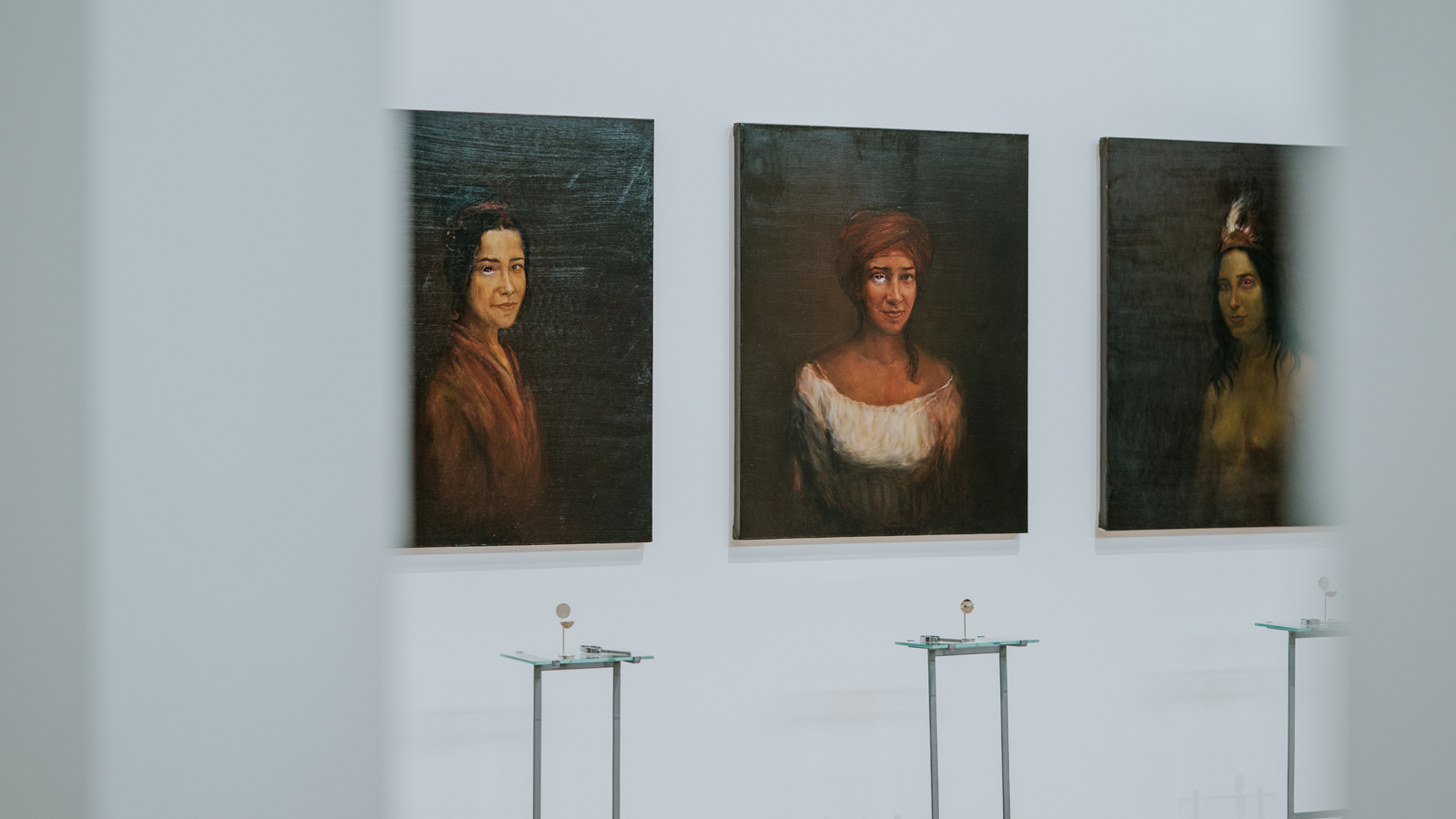
In this room, the works of Adriana Varejão and Paula Rego explore the marks left by colonial violence and its effect on the construction of identities. In ‘Eyewitnesses X, Y, and Z’, Varejão dialogues with the caste paintings of the Spanish colonisation of Mexico, exploring the classificatory practices that prevailed at that time. Her three portraits – a Chinese, a Moorish and an Indigenous woman – have their eyes gouged out and are arranged as a sculptural work, referring to the nineteenth-century belief, propounded by optography, that the final image seen by someone before they died would be imprinted on their retina. The artist’s investigative gesture resurfaces in ‘Exploratory Laparotomy III’, where the brutality of the incision evokes the scientific obsession with dissecting and categorising bodies.
Rego’s painting ‘Wide Sargasso Sea’ – inspired by the novel of the same name by Jean Rhys – resonates with this idea of erasure and violence, narrating the exile and annulment of the identity of Antoinette, a Creole of European descent in post-colonial Jamaica. In ‘Food’ and ‘Passage from Macao to Vila Rica’, Varejão evokes the forced displacements fostered by Portuguese colonisation, drawing connections between Brazil and Macao. The room’s title summarises this tension between pleasure and pain, history and oblivion, stitching the works together in a nuanced testimony to the permanence of history in the respective territories and their people.
-
We Eat, Dance, Kill and Mix
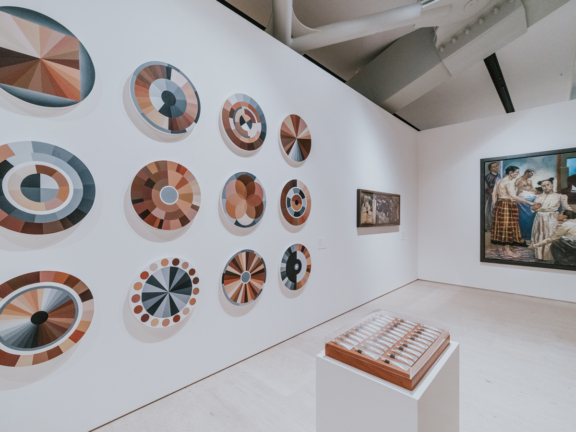
In this room, a small painting by Paula Rego has a powerful impact, especially because of its title: ‘When we had a house in the country we’d throw marvellous parties and then we’d go out and shoot negroes’. Direct and disturbing, the work lays bare the brutality of racism, a subject the artist rarely tackled with such sincerity in her career. In ‘Mother’, Rego portrays a young mixed-race woman next to a male figure who rests his hand on her breast, hinting at the dynamics of power and submission within the domestic space.
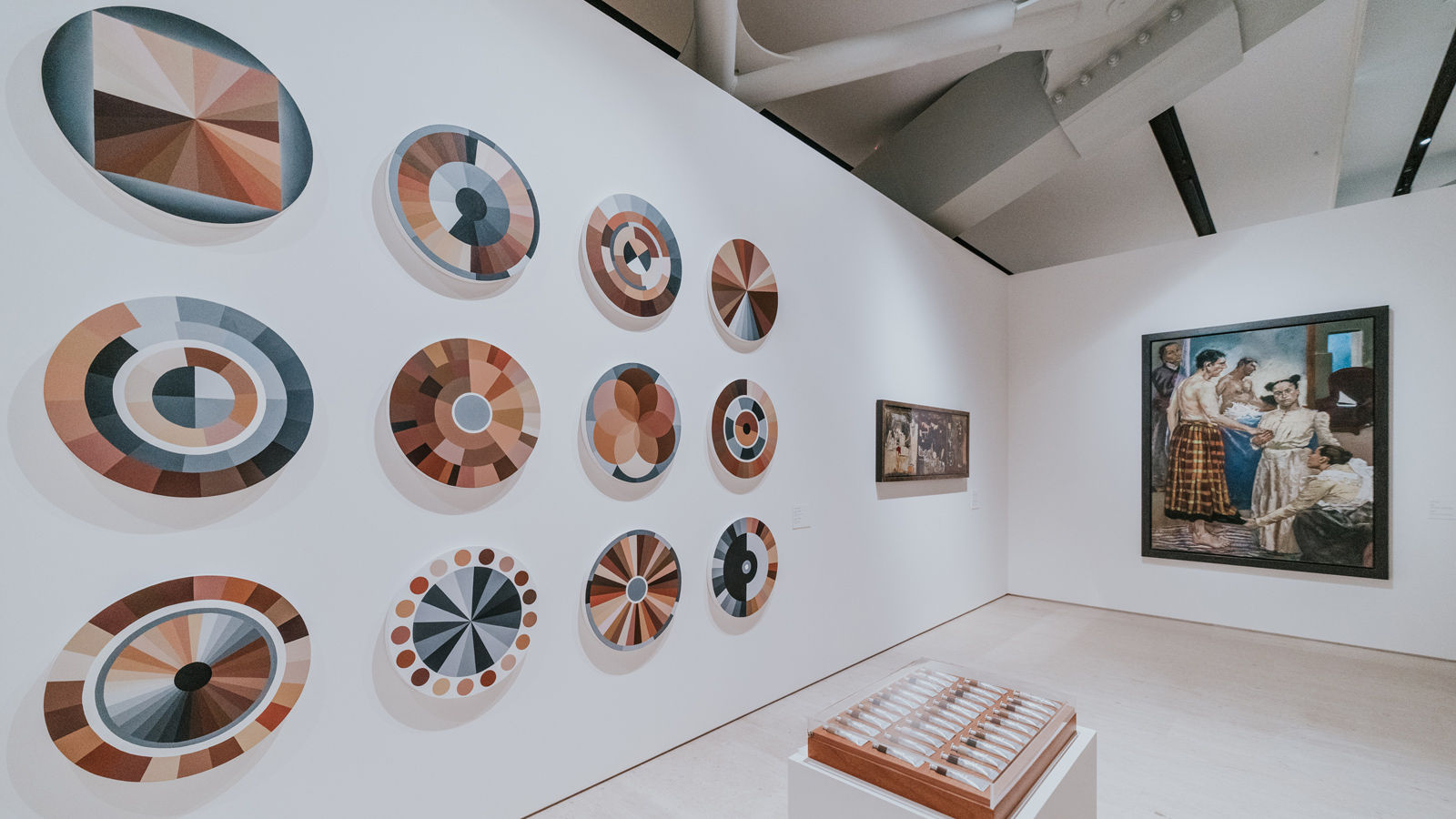
With her series, ‘Polvo’, Adriana Varejão investigates racial dynamics in Brazil, based on a 1976 government census that allowed citizens to self-describe their own skin colour. The results of this census, both absurd and revealing, were used to name a set of paints created by the artist. Finally, Rego’s triptych ‘Human Cargo’ invites us to reflect on the fragility and instability of the human condition, mixing narratives of gender, oppression and inequality.
-
Echo Chamber
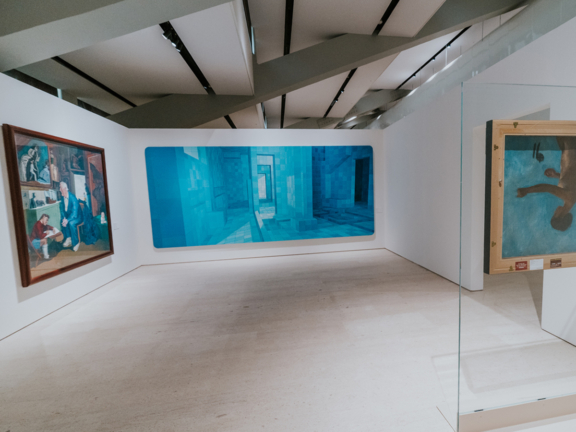
In this room the concept of time, past and present, reveals different layers of meaning and subversion in the work of both artists. We are invited to stop and enter a place with no defined time, a labyrinth of grids and doors that create the geometric illusion of perspective.
Adriana Varejão’s works – such as ‘The Seducer’ or ‘Obsessive’ – present spaces which at first glance seem to be empty, but convey a dense psychological energy and insinuate presences. Floating on a blue background, a nude portrait of Paula Rego made by her husband, Victor Willing, appears inverted. The artist appropriates of the reverse side of this canvas to paint ‘Turkish Bath’, a critical reinterpretation of Ingres’ work of the same name, in which Rego uses collages to manifest and revindicate early feminist issues.
-
Cleansing Rituals
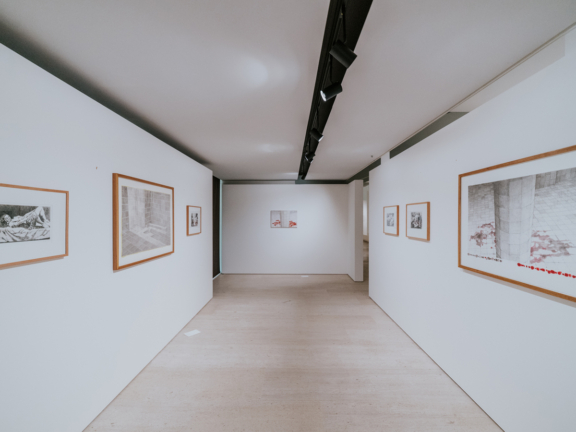
Violence is the principal theme of this room dedicated to graphic works – black and white engravings and lithographs. In Adriana Varejão’s works we are confronted with apparently uninhabited and aseptic spaces, enveloped in icy silence, but impregnated with impurities, bodily fluids and human detritus, such as hair and blood.
In Paula Rego’s series, ‘Untitled’, which she didn’t name because of its subject matter, she depicts women having abortions, sacrificial acts conducted in domestic and hidden environments. This set of prints, with a strong political content, was conceived with the aim of democratising access to these images, as a gesture of indignation at the result of the referendum to legalise abortion in Portugal in 1998.
-
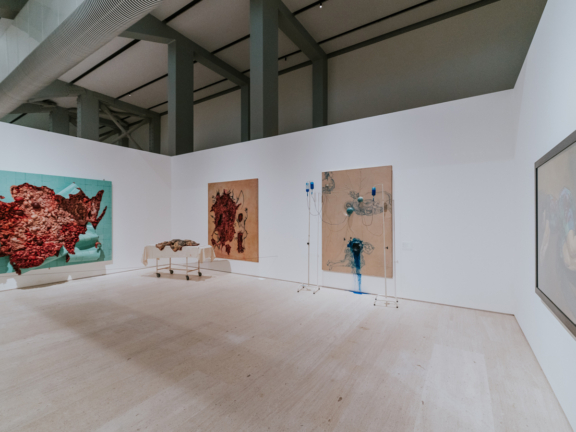
Extirpations
The works presented in this room deal with themes related to the body, suffering, healing and the duality between the interior and exterior. Triptych, a work of Paula Rego’s emblematic Untitled series, dedicated to abortion, leads the visitor to reflect on women’s right to make decisions about their own bodies. The artist created these paintings in the 1990s, also as a way to denounce clandestine operations caused by the ban on abortion. This theme is still relevant today throughout the world, where male power continues to dictate, to a large extent, decisions on sensitive issues related to women’s reproductive rights.
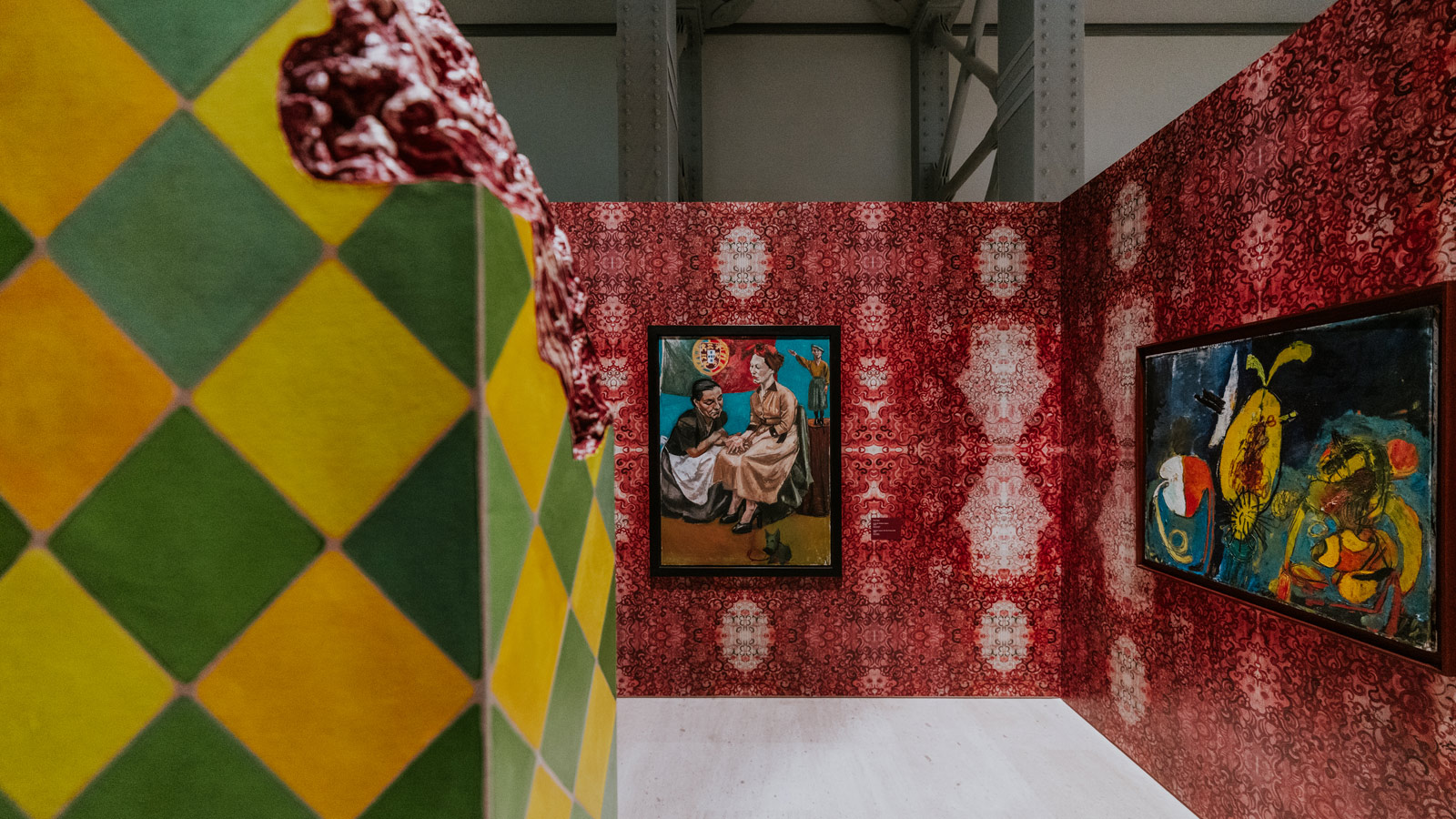
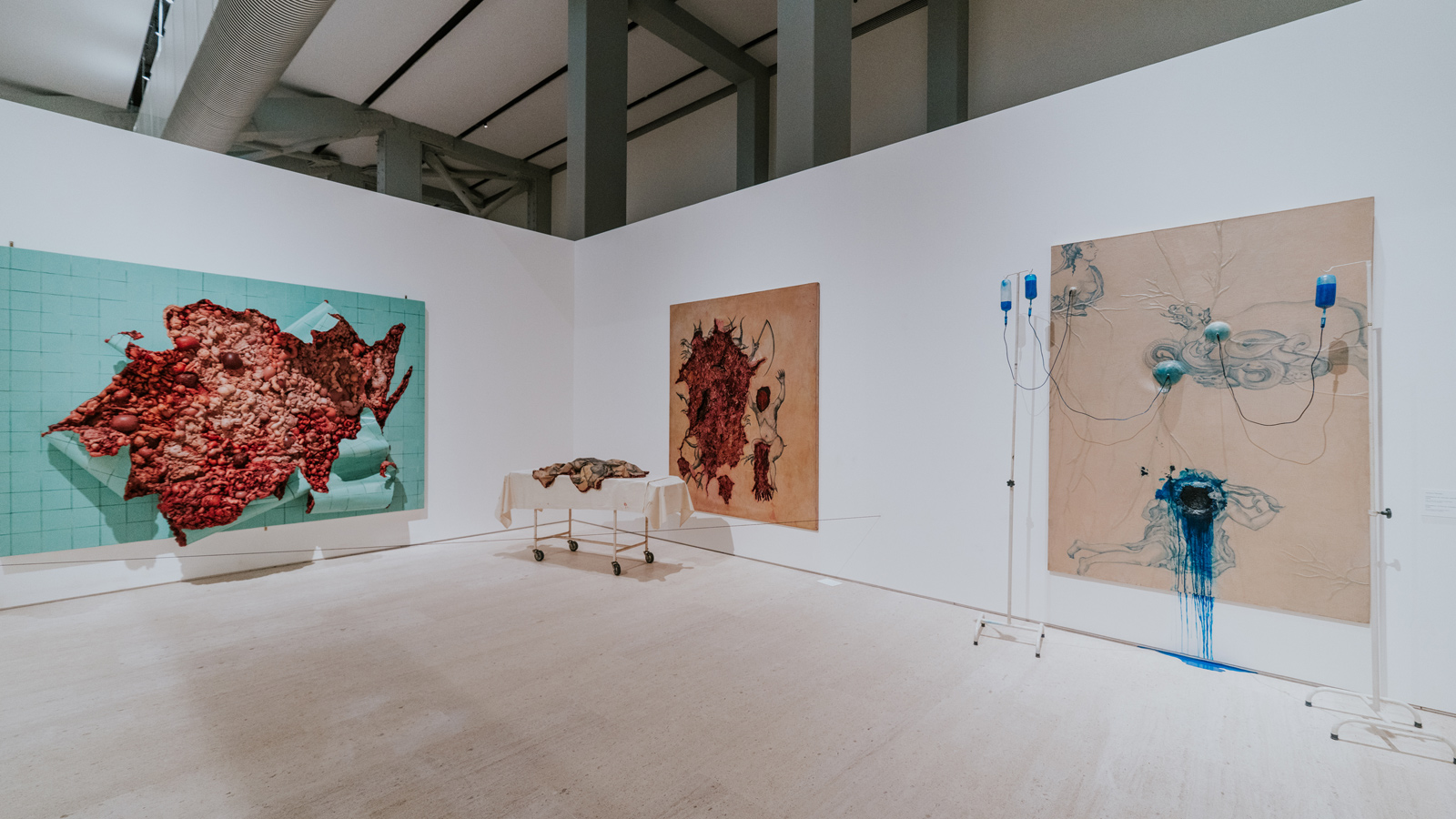
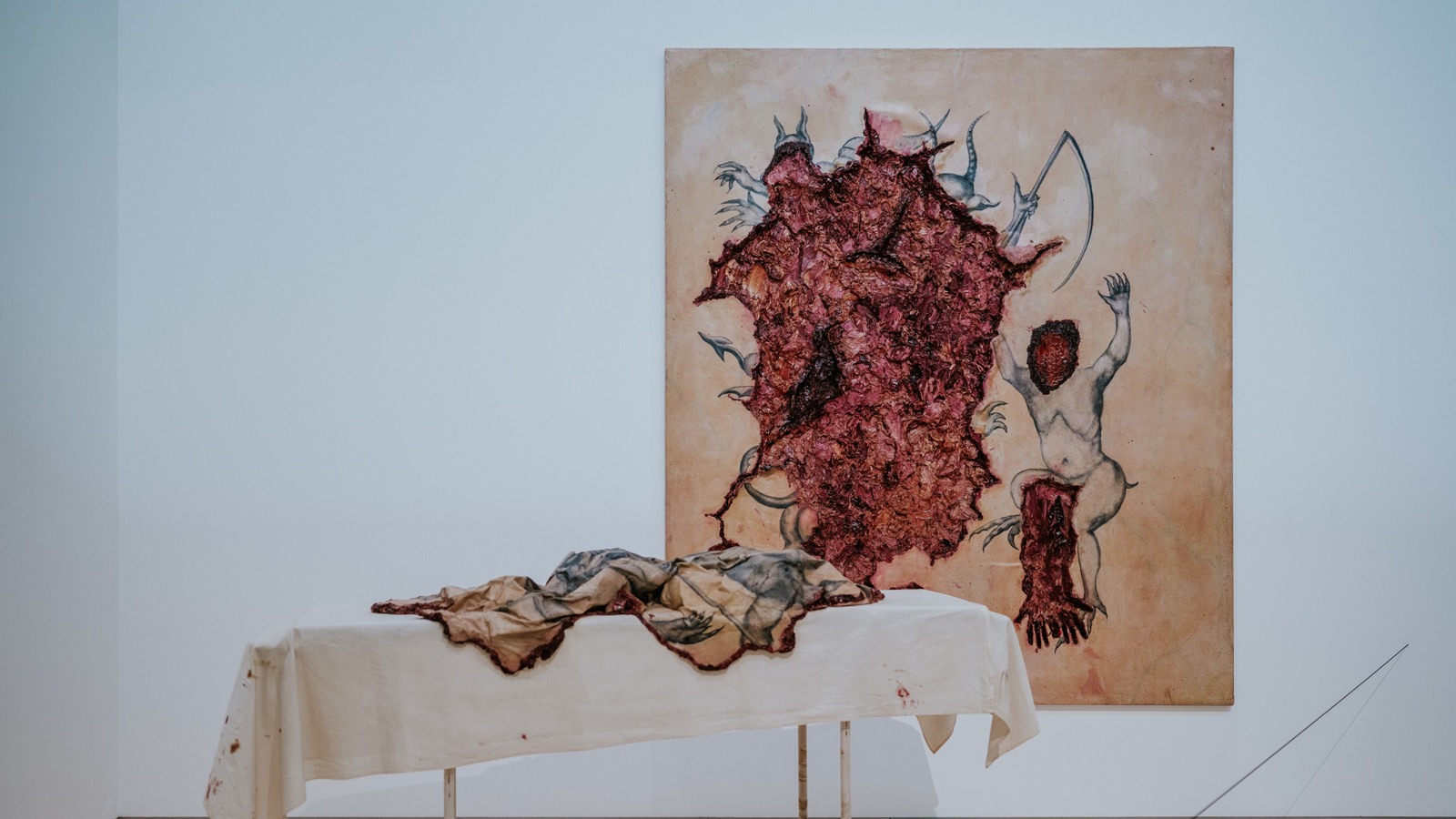
Using hospital instruments, Adriana Varejão’s two works from the series Extirpation of Evil form a kind of painting-installation, which explores therapeutic and purification procedures. These works establish an empathetic and vigorous conversation with Rego’s paintings, since both artists explore the tense relationship between violence and the possibility of regeneration. In Green Tiles in Raw Flesh, the neatly arranged tiles are brutally ripped apart and the inner layers spill out into space, creating a powerful visual impact, revealing a living, rebellious and chaotic organic interior.
-
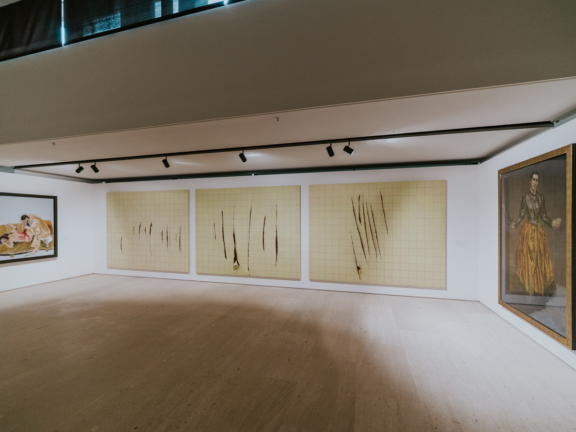
Sharpened Knife
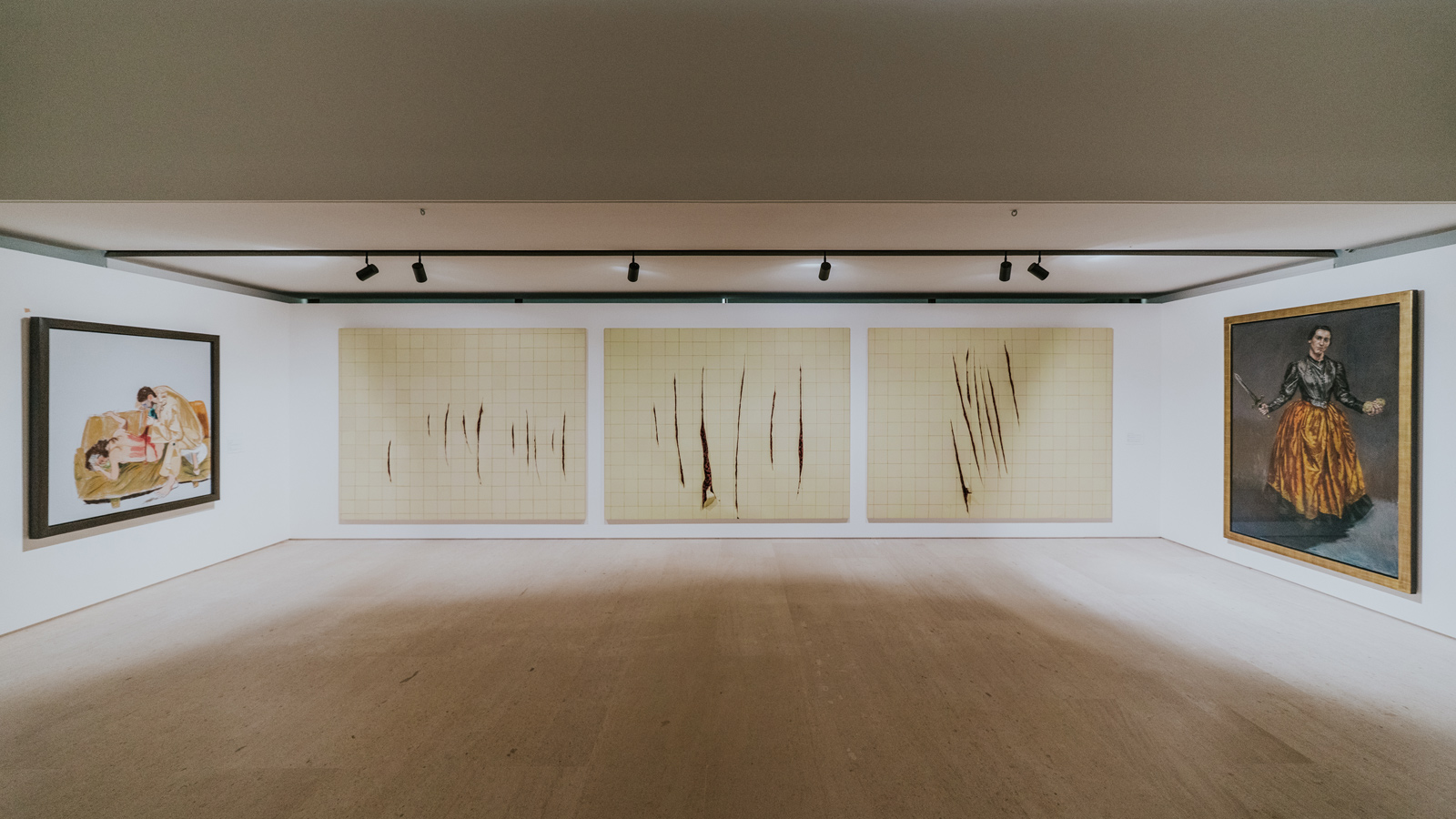
Paula Rego’s works Angel and Flayed and Adriana Varejão’s triptych Wall with Incisions à la Fontana all explore the theme of cutting and the symbolism of violence, revelation and transformation. While Angel presents a powerful female figure wielding a sword and holding a sponge – ambiguous symbols that refer to cutting and cleansing, justice and sacrifice – Varejão makes a reference to incisions in works by the Argentinian-Italian artist, Lucio Fontana, endowing them with a visceral and historical dimension that is absent in Fontana’s original works.
Just as the sponge in the Angel’s hand could be used to clean the blood spurting from the knife, the tiles evoke cold aseptic spaces of domination – hospitals, kitchens, torture rooms. Both works therefore explore violence as a structuring element and the tension between destruction and regeneration. Rego’s Angel can be viewed as one hand that wounds and another that prepares to cleanse or heal – in a double gesture that resonates in Varejão’s surgical incisions.
-
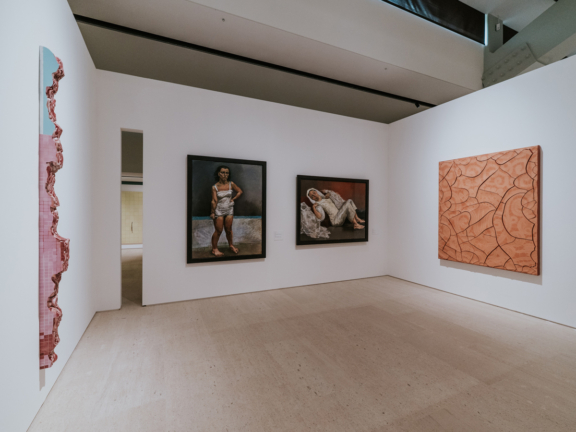
Inside the Room, Out of Myself
A woman dressed in white in Paula Rego’s painting Bride stares at the viewer who enters the room. Her gaze, enigmatic and indecipherable, conceals her true psychic state, and doesn’t give us any clues about the respective moment in time – before or after her wedding ceremony? The narrative complexity suggested by Rego in Bride is also present in her paintings, Scavengers and Girdle. The women are portrayed in dark, unrevealing and claustrophobic environments.
Adriana Varejão’s new work, Renaissance Lace, specifically made for this exhibition, references the fabric used in wedding dresses, returning to the pattern of Brazilian lace with European roots. Associated with the delicate painting of lace, there is a silent explosion in the craquelure of the painting. Varejão’s Modernist Ruin I intensifies, through the theatre of the flesh, the attempt to give a voice to the muffled cries of each of the women in the painting.
-
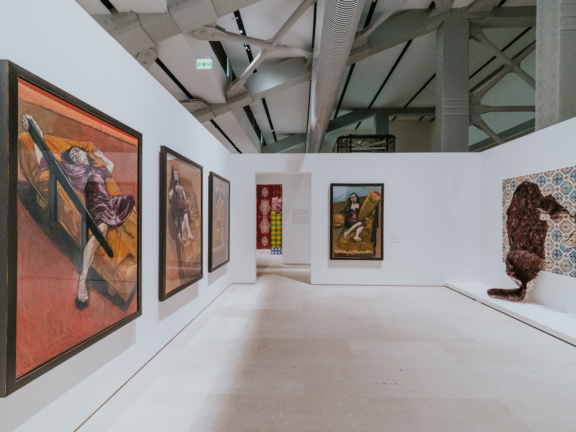
Body in Trance
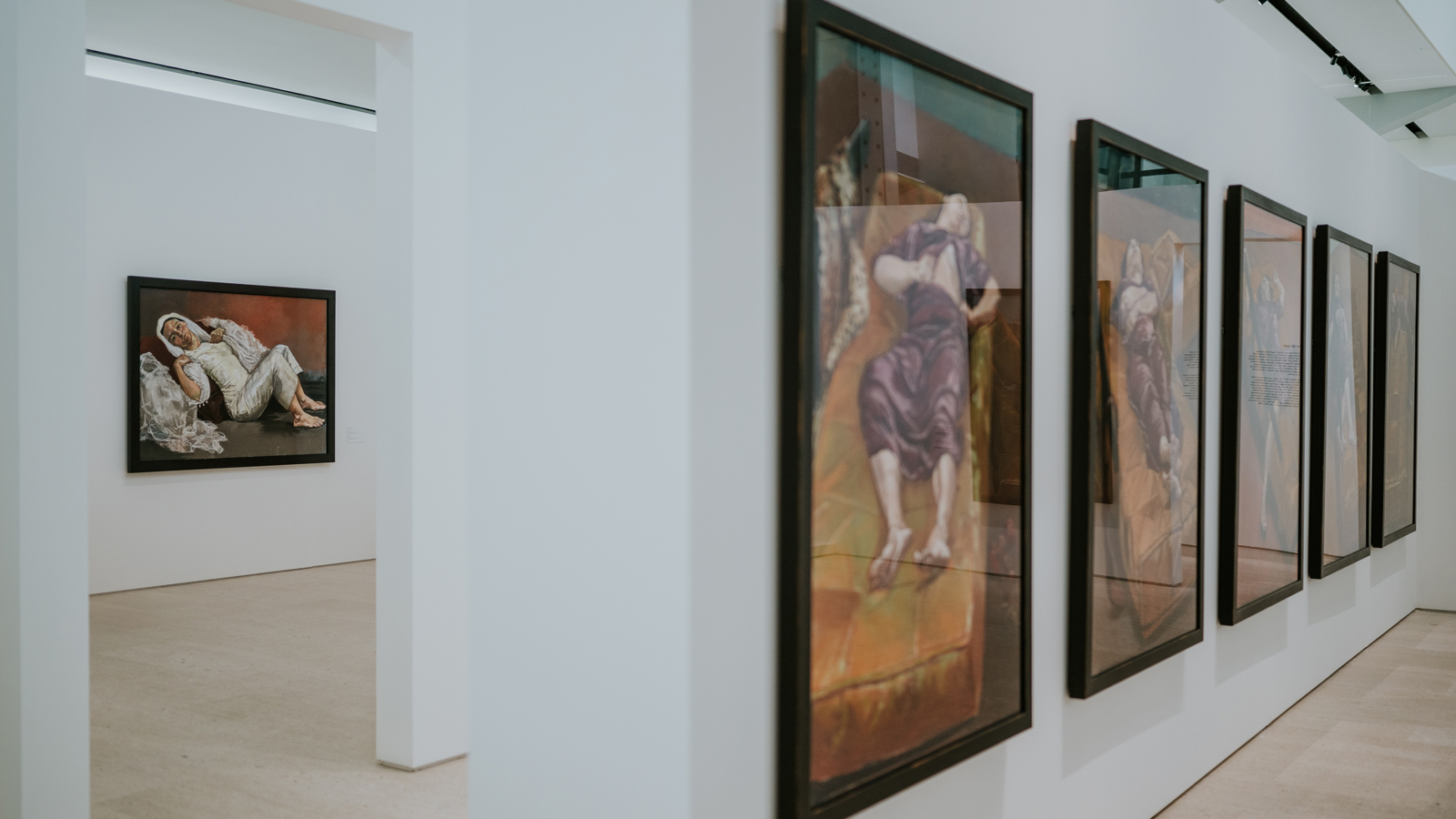
In Possession, Rego presents a woman in different positions on a couch, referring to the iconography of hysteria from nineteenth-century medicine, when women were diagnosed and treated by doctors who associated their bodily reactions with a supposed absence of emotional control. The work questions this pathologising male gaze towards the female body, transforming the woman portrayed into an active subject, who acts and challenges her own representation. The body ceases to be a mere object of study and instead becomes a territory of resistance and ambiguity, exploring the tense boundaries between oppression and autonomy, fragility and strength, submission and revolt.
This clash between restraint and excess reappears in Varejão’s Tongues. The Portuguese azulejo tile, a symbol of order and civilisation in colonial architecture, is violently ripped open, revealing internal layers of thick paint that resemble living flesh. The tongue – an organ of the body associated with both speech and desire – bursts out of the rigid and decorative surface, crossing the boundary between the contained and the expressive.
-
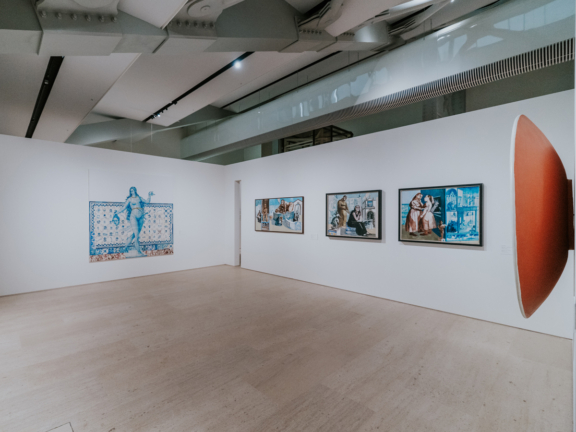
Reconfiguring the Sacred
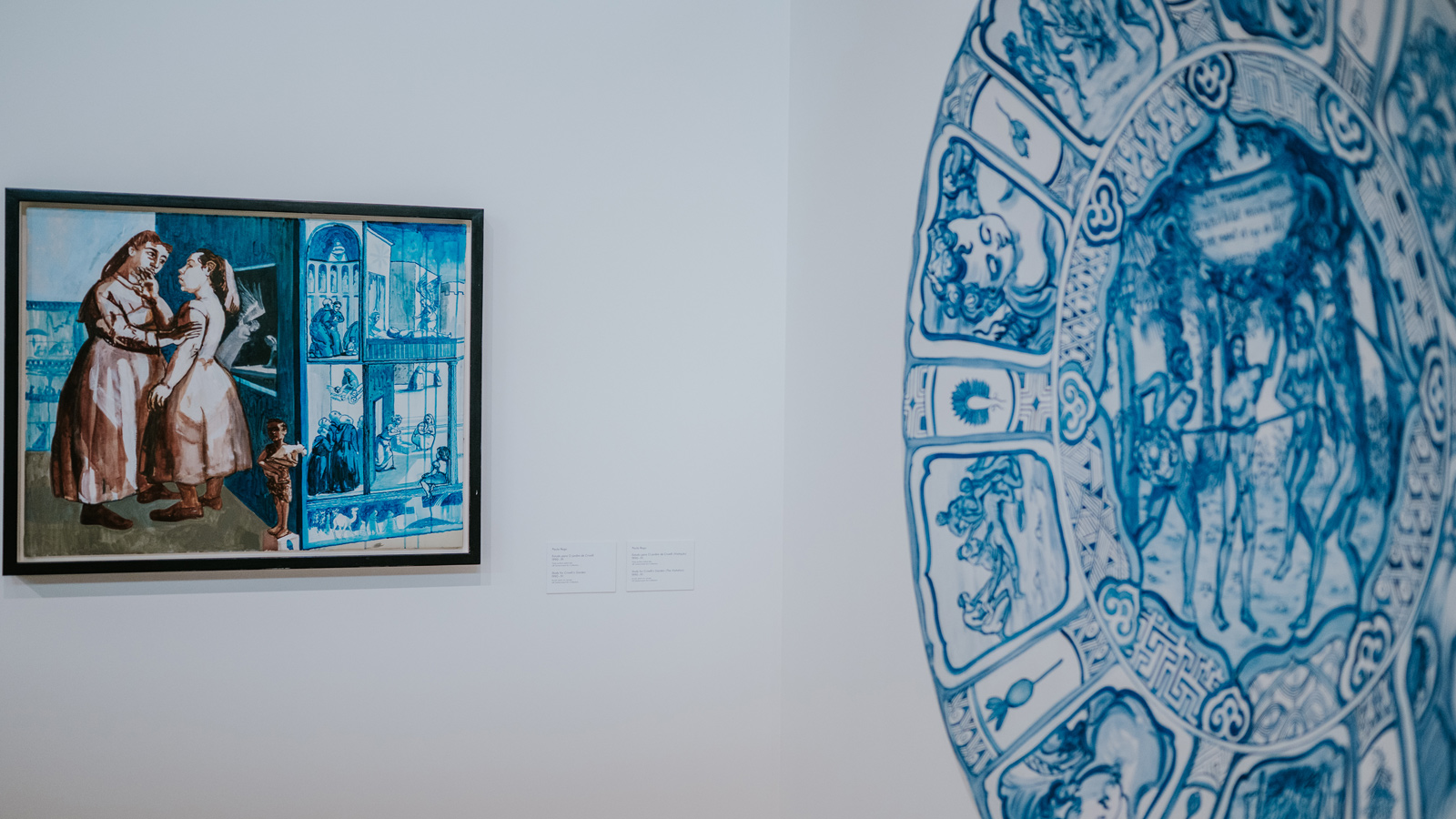
The Portuguese baroque azulejo tile, a central element in Adriana Varejão’s work, appears in this room in three important works. In Proposal for a Catechesis: Death and Dismemberment, she recreates scenes from the colonial period, but subverts the official history by combining elements of Christian catechesis with references to indigenous culture and anthropophagy. We see images of Christ, who is bound and surrounded by indigenous people, suggesting an inversion of the narrative of forced conversion. In this way, Varejão makes a radical symbolic reversal of the colonial narrative: instead of the indigenous people passively absorbing the European faith, it is they who «devour» – literally and culturally – the coloniser’s symbols.
The three paintings by Paula Rego in the series of studies for Crivelli’s Garden extend the dialogue on Portuguese azulejo tiles and subvert recurring biblical narratives in the work of Carlo Crivelli – the Renaissance painter who inspired the large panel that Rego created for the National Gallery, London (1990–91). In these paintings, female figures inspired by biblical characters and by the artist’s close acquaintances are inserted into a setting that fuses Renaissance influences and Portuguese culture. The work stands out through the way that Rego humanises these religious scenes, bringing them into a more personal and contemporary context.
-
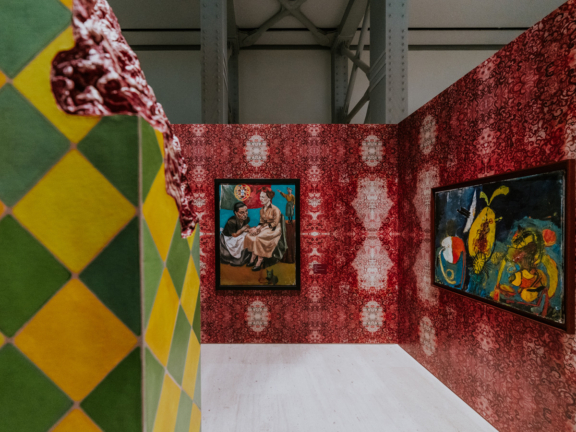
In Spite of You
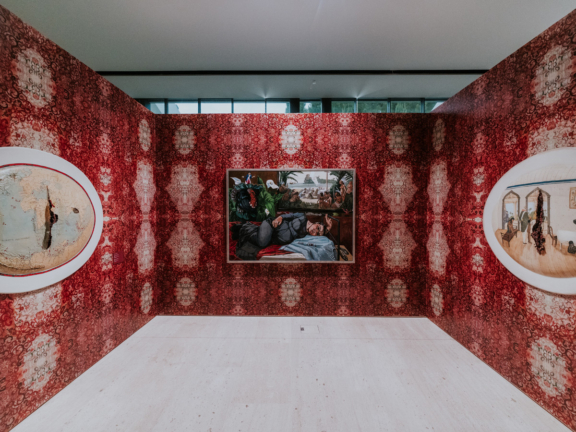
This room returns us to the exhibition’s opening scene – a small room lined with wallpaper created by Adriana Varejão, that signals the wounds caused by oppressive regimes. These two moments act as milestones that connect Portugal and Brazil in different historical periods. While the first room marks Portuguese colonisation in Brazil, this room establishes a temporal approximation, referring to the authoritarian governments that have marked the recent history of both countries.
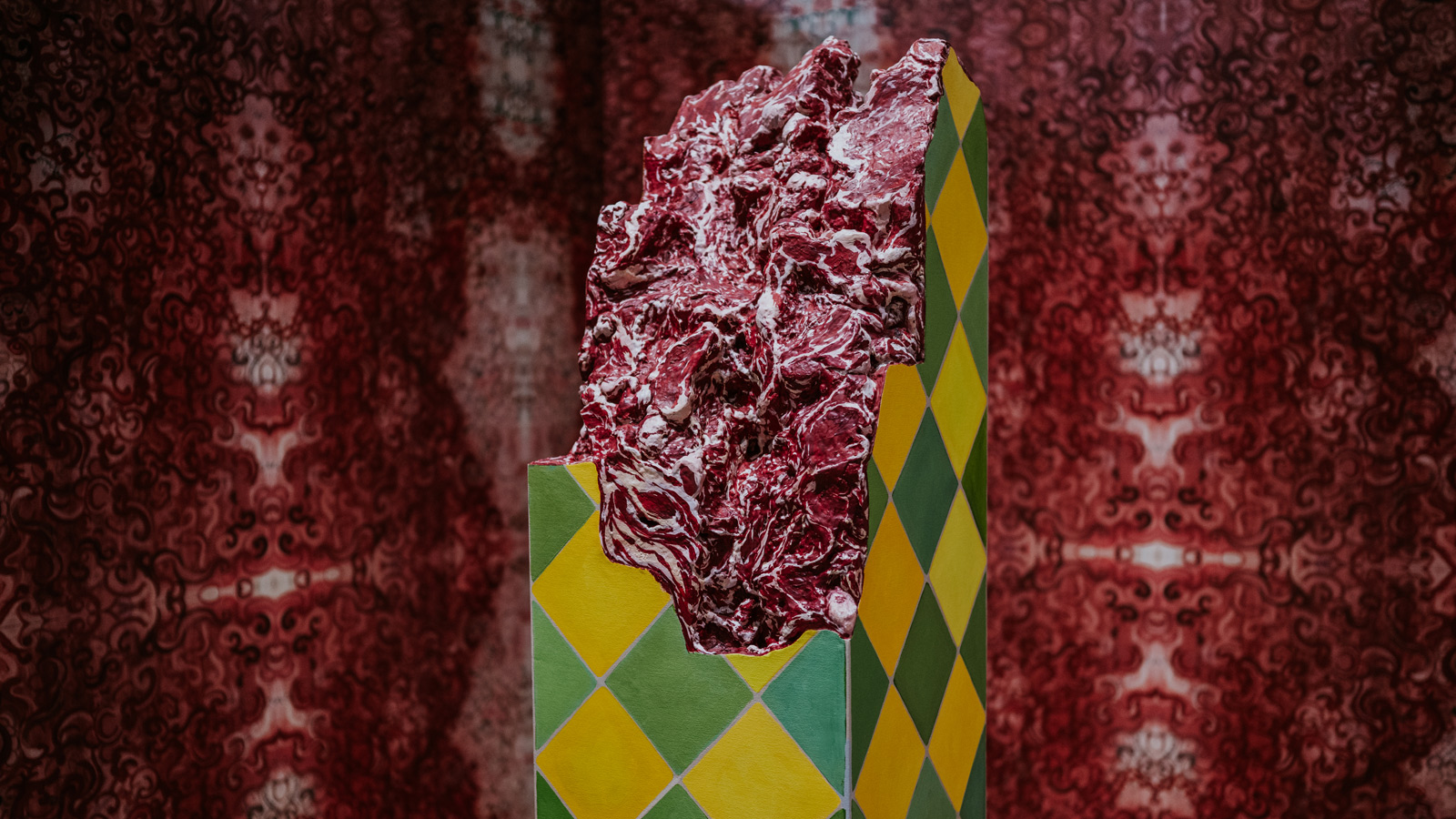
The artists intervene in an incisive manner and in their works reveal political criticism of these regimes. Paula Rego’s Salazar Vomiting the Homeland is a visceral image that denounced the oppression of the regime. Adriana Varejão presents Brasilis Ruin, a robust and stable column in the colours of the Brazilian flag, which begins to collapse at the top, symbolising the collapse of a political structure. The works reflect on the deconstruction of national symbols and artistic resistance to political oppression. The room’s title refers to a song by the Brazilian singer-songwriter Chico Buarque that has endured to this day as a protest song against Brazil’s military dictatorship (1964–1985).
-
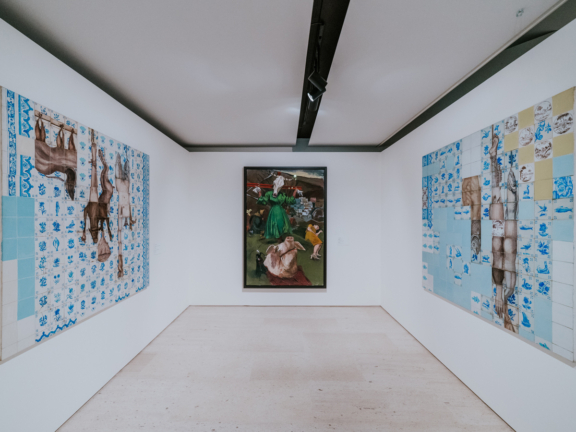
Extraordinary Creatures
In this room we are confronted with the fragile boundary between the human and animal worlds, where the hierarchies between different species are dissolved. The works show hybrid figures, such as Minotaurs – with human bodies and animal heads – in dialogue with Adriana Varejão’s Kitchen Tiles series. In these paintings, pieces of human and animal bodies hang over traditional Portuguese azulejo tiles, blurring the boundaries between flesh and identity.
The fusion between human and animal dimensions is also manifested in Scarecrow and the Pig and in the staging that served as a model for the canvas, made by Paula Rego in her studio, in which stage props reinforce this symbolic transformation. As we leave the room, a naked and pregnant portrait of Varejão, in the forest in Rio de Janeiro, with the head of an animal, suggests an enigmatic ritual. With a strong theatrical dimension, the image explores the threshold between the body, nature and metamorphosis, reaffirming the tension between the domesticated and the wild.
-
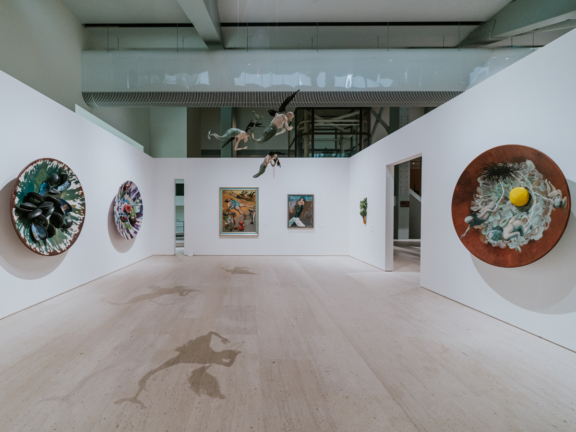
The Sea, Where I Am to Myself Given Back in Salt, Foam, and Shell
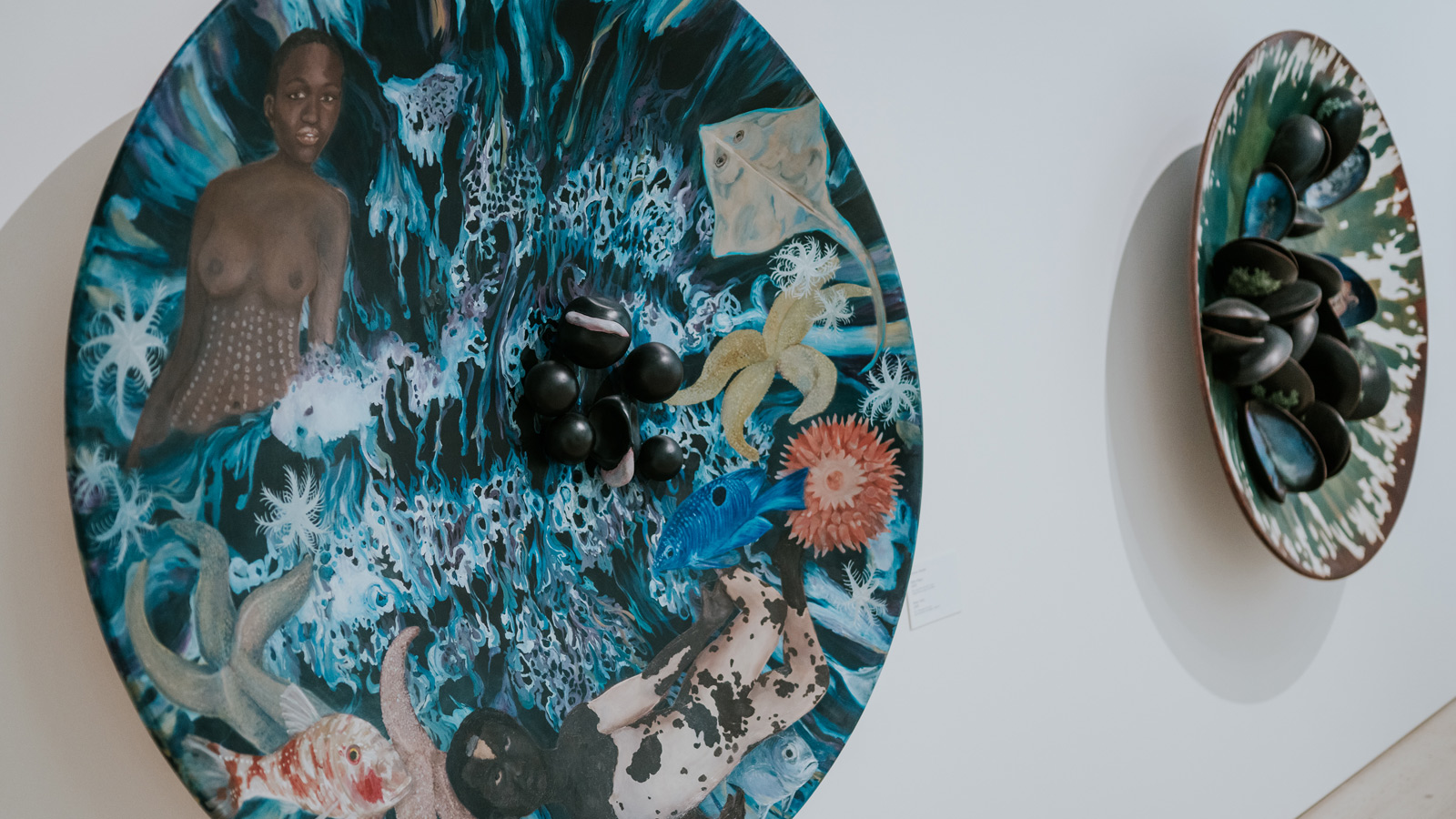
The title of this room pays tribute to the Portuguese poet, Sophia de Mello Breyner Andresen, who viewed the sea as a place of origin and dissolution, of encounter and loss. Separated by the Atlantic ocean, it is by traversing the ocean that Portugal and Brazil cross paths and their histories intertwine. The construction of Brazilian identity was partly moulded by the traces and remains left behind by this sea, which here assumes centre stage in the narrative.
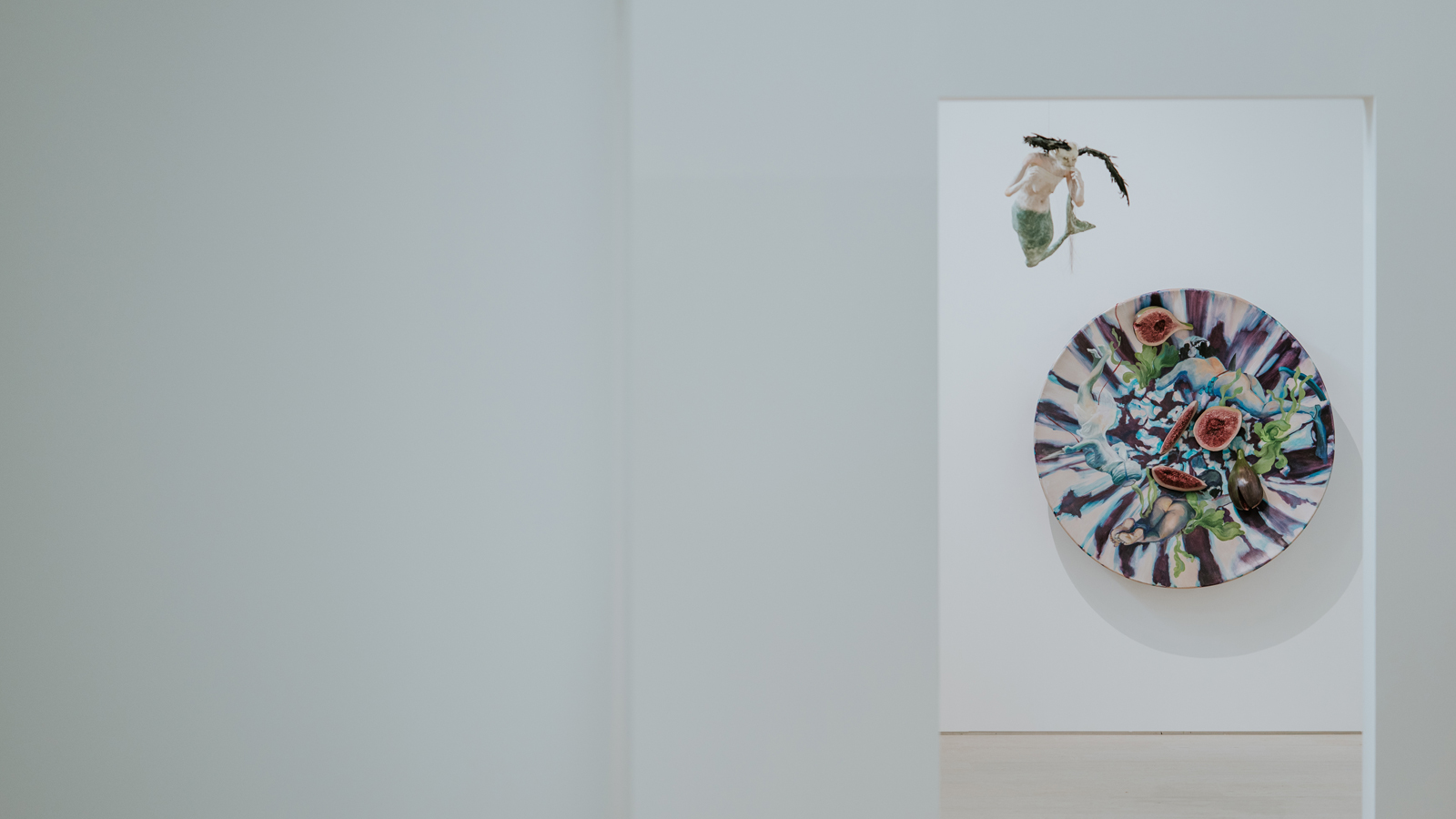
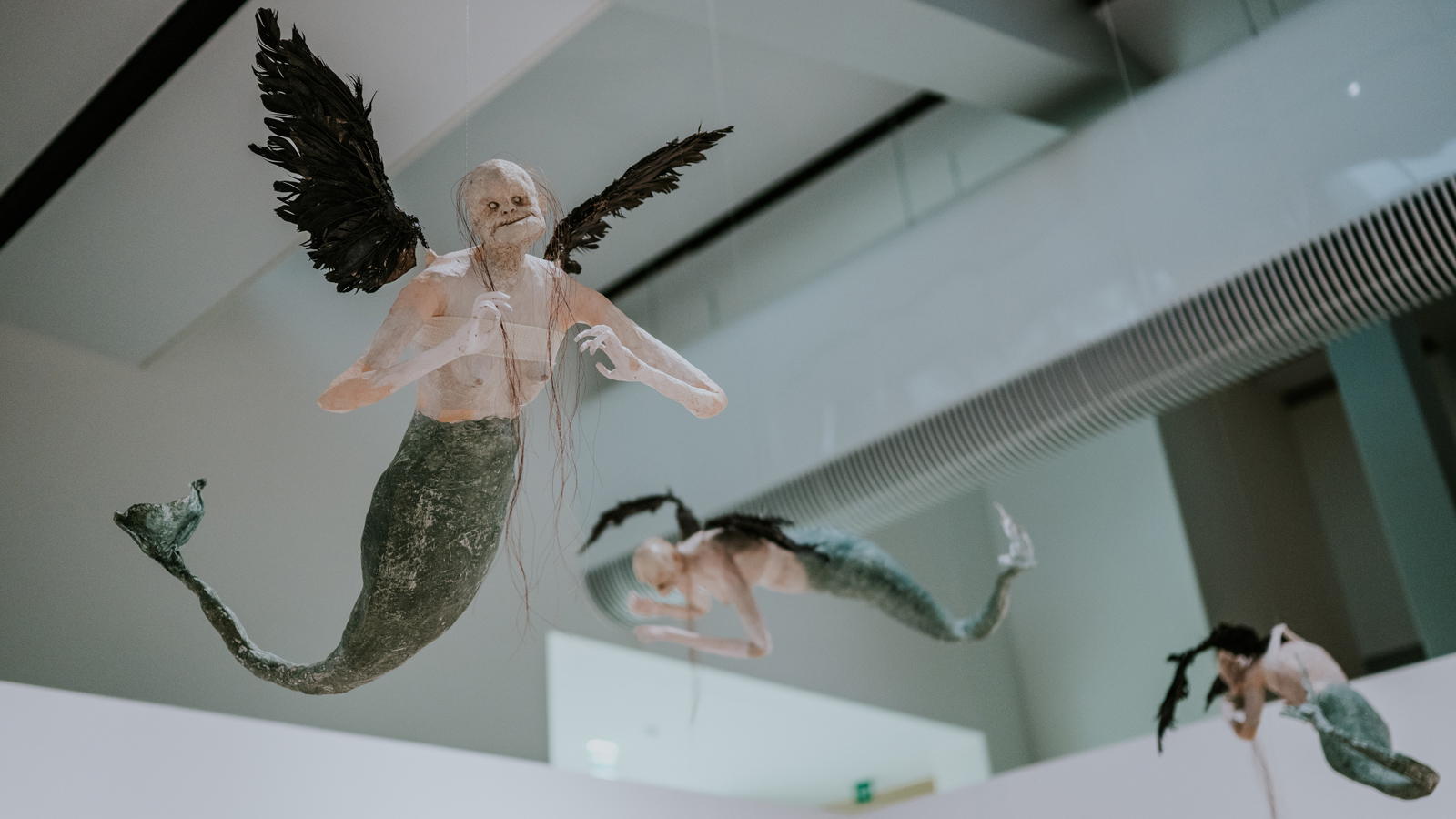
Both artists engage in a dialogue with the Portuguese ceramist, Raphael Bordallo Pinheiro, both in Varejão’s ornate dishes and Paula Rego’s open fig. The representation of mermaids and other female figures linked to the sea, as well as marine animals, also appear as a meeting point between their artistic creation. While Rego deconstructs the image of mermaids, breaking with the idea of seduction and objectification, Varejão presents female figures as symbols of strength, birth and vitality.
Between salt, foam and shells, this room is constructed as a space where water carries fragmented stories and bodies that float, between the real and the imagined.
Publications
Biographies
-
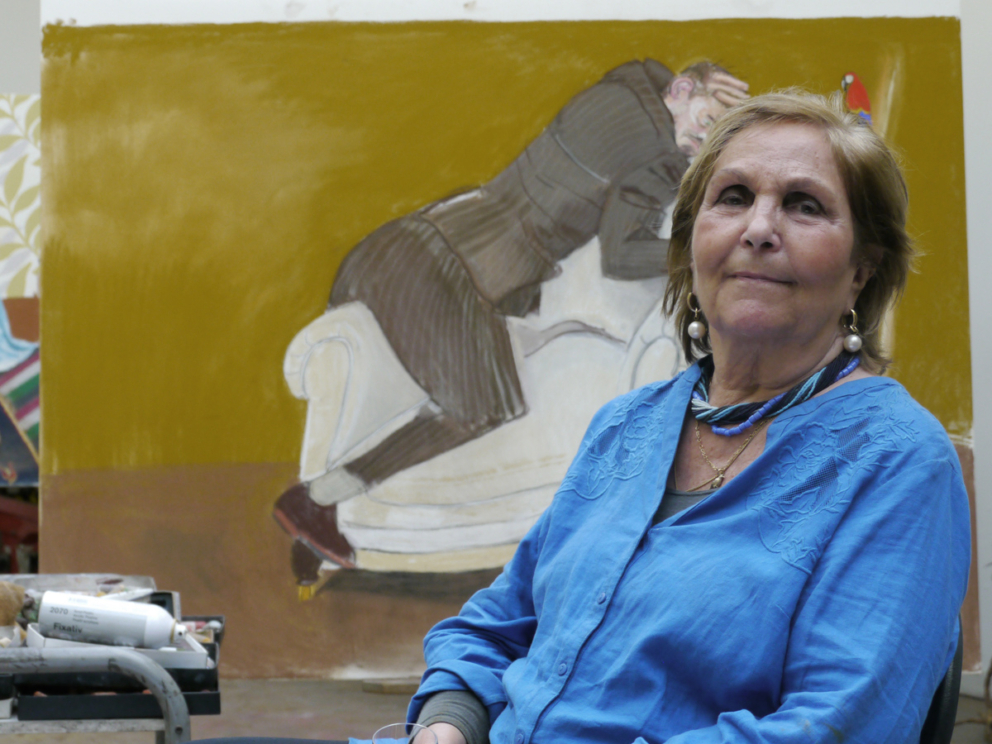
Paula Rego
Paula Rego (1935, Lisbon, Portugal – 2022, London, United Kingdom) was one of the world’s most influential contemporary figurative artists. Her paintings were fueled by diverse sources, including literature, politics, feminism, folk legends, myths, and fairy tales, exposing hidden facets of their narratives. Intolerant of dictatorial regimes, Rego explored human relationships in her work, turning a critical eye on the established order and the codes, structures, and power dynamics that reinforce or repress the characters she portrayed. The artist was a pioneer in bringing attention to topics related to gender issues and female perseverance. Significant works on this subject include the Dog Women series, begun in 1994, and the Untitled series (1998–99) on abortion, which is believed to have influenced the success of Portugal’s second referendum on the legalization of abortion in 2007.
-
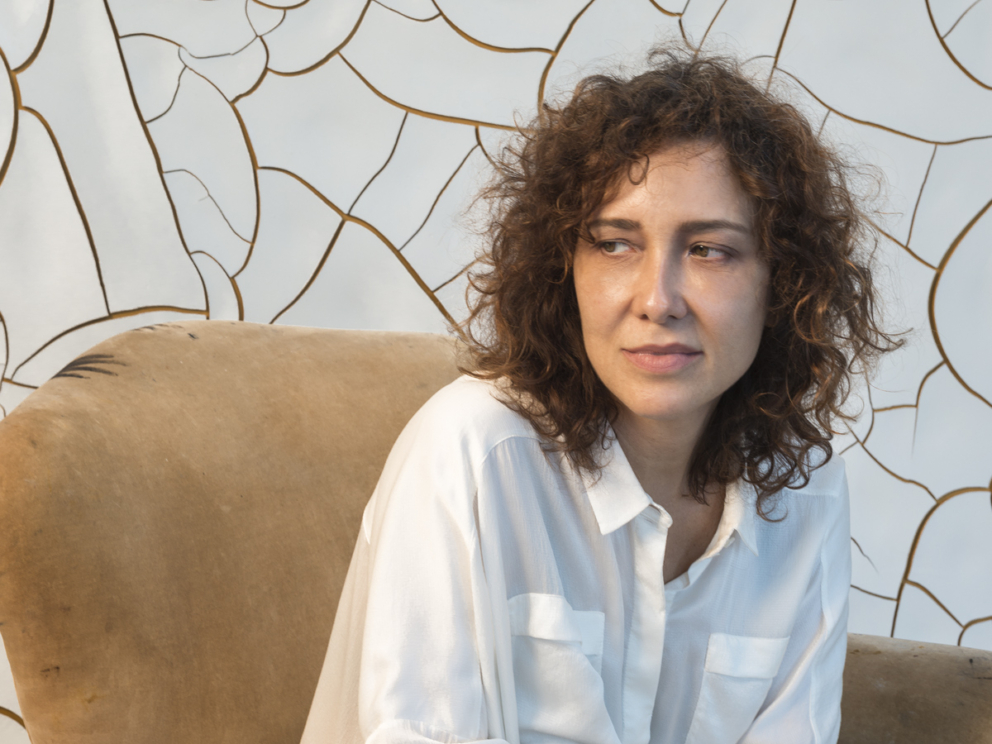
Adriana Varejão
One of Brazil’s leading artists, Adriana Varejão (1964, Rio de Janeiro, Brazil) is internationally recognized for her distinctive visual language marked by Baroque elements of parody, paradox, tension, and excess. Her works often blur the boundaries between artistic mediums – for example, paintings with elaborate sculptural reliefs that burst from the canvas, and theatrically painted sculptures – while engaging with subject matter that challenges widely held assumptions about art and culture. Since the 1990s her practice has sparked critical conversations about decolonial narratives, delving into the violence, eroticism, and pluralism of Brazilian history and its entanglements with the rest of the world.
-
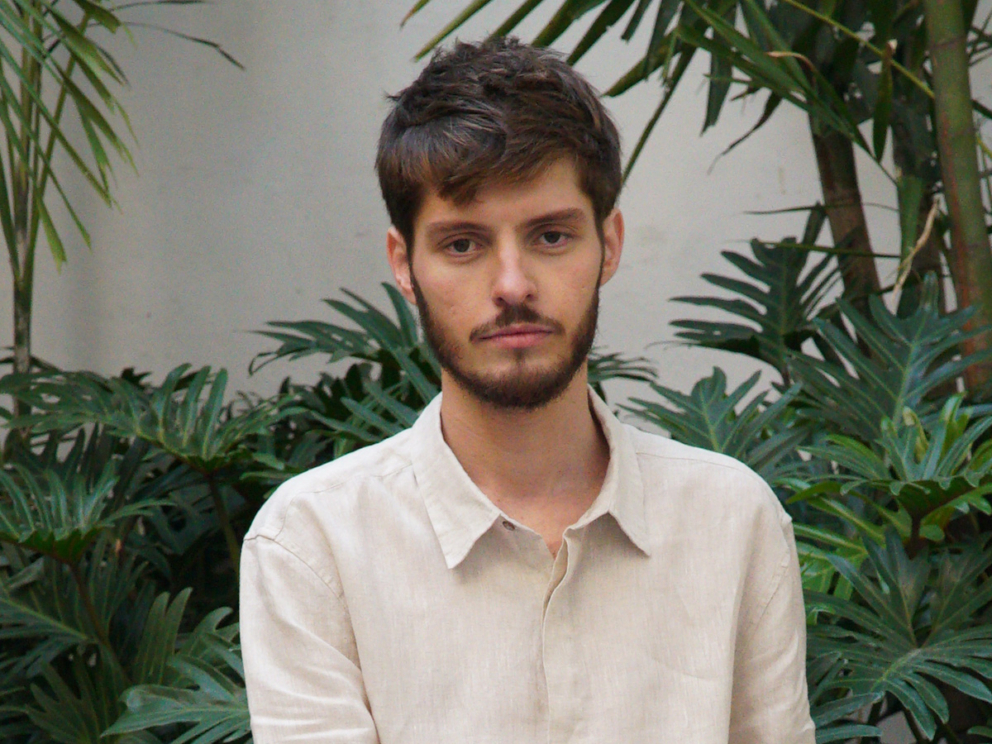
Victor Gorgulho
Victor Gorgulho (1991, Rio de Janeiro) is a curator and researcher. He has a degree in Journalism from ECO-UFRJ and is studying for a master’s degree in Culture and Contemporaneity at PUC-Rio. He has curated group and solo exhibitions such as ‘Vivemos na melhor cidade da América do Sul’, together with Bernardo José de Souza (2016), ‘Eu sempre sonhei com um incêndio no museu – Laura Lima & Luiz Roque’ (2018) and ‘Os Monstros de Babaloo’ (2021). He was also guest curator of the first edition of the Pivô Satélite project (2020-21), together with Diane Lima and Raphael Fonseca. He was chief curator of the Inclusartiz Institute (2022-24) and is currently one of the guests at the ORGANISM programme organised by the TBA-21 – Thyssen-Bornemisza Academy, Madrid.
Credits
Curatorship
Adriana Varejão
Helena de Freitas
Victor Gorgulho
Scenography
T+T PROJETOS
Daniela Thomas
Felipe Tassara
Maristella Pinheiro
Main image
View of the exhibition © Pedro Pina
Nave and Exhibition Sponsor

Exhibition Sponsor


The Calouste Gulbenkian Foundation reserves the right to collect and keep records of images, sounds and voice for the diffusion and preservation of the memory of its cultural and artistic activity. For further information, please contact us through the Information Request form.